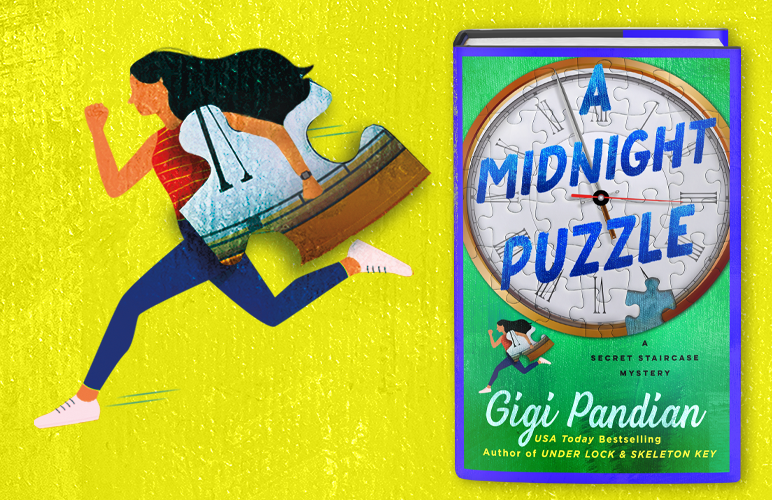
Jaya Jones treasure hu...

An Art Crime Conference in Italy

I’m home from Italy, where I visited wonderful author pal Stacy Allen, who lives in Italy, and attended an art crime conference as book research for my next novel.

What’s an art crime conference?

The TL;DR is that it’s a group of people across disciplines and borders who get together to talk about how best to preserve and restore stolen art and cultural heritage.

The Association for Research into Crimes Against Art (ARCA) hosts this interdisciplinary conference each summer in Amelia, Italy, a medieval hill town in Umbria that’s a little over an hour outside of Rome. Academics, law enforcement professionals, security experts, lawyers, provenance experts, investigative journalists, authors, museum staff, and art collectors from more than a dozen countries attended.

cloisters behind ancient walls

It was held at the Collegio Boccarini, inside the old town’s ancient defensive walls.

Yes, this is a photo of the venue. When I first set foot in these cloisters, I felt as if I’d stepped back in time. I found out later that it was a former Franciscan convent, with cloisters added in the 16th century. It now holds the town’s archaeological museum and is also used as a conference venue.
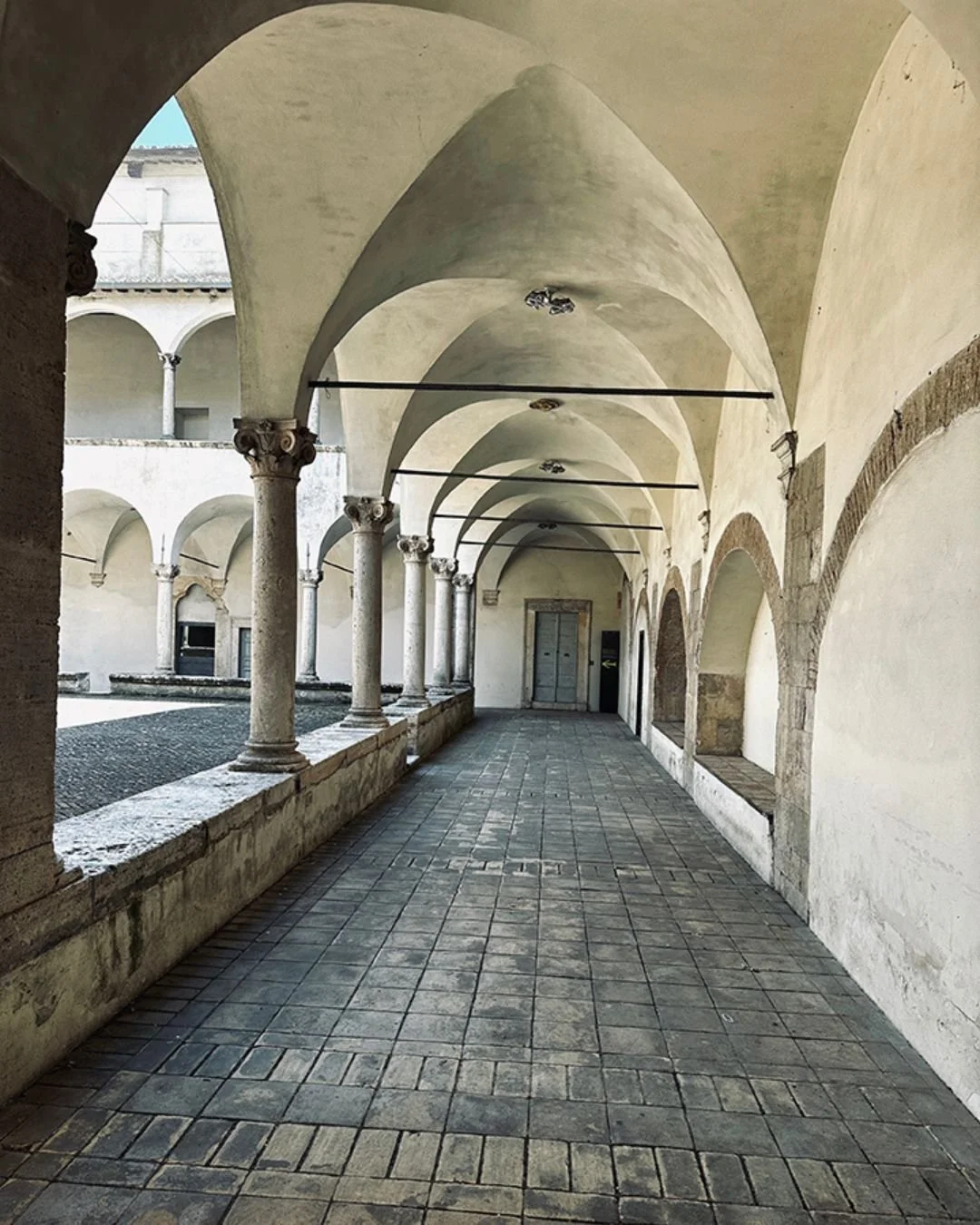
The Collegio Boccarini cloisters in Amelia, Italy. Stone arches and floors.

The Collegio Boccarini cloisters in Amelia, Italy.

The talks I’m still thinking about

The conference kicked off with a talk by investigative journalist Michael Blanding, author of The Map Thief: The Gripping Story of an Esteemed Rare-Map Dealer Who Made Millions Stealing Priceless Maps. To research his forthcoming book, The Gospel According to Hobby Lobby, he dug into the secret story of how the family behind the retailer created a museum filled with biblical antiquities that were looted, stolen, and forged. I love nonfiction that reads like a thriller, and I bet this book is going to be one of them.

Antiquities theft expert Jason Felch, another investigative journalist, created the Museum of Looted Antiquities (MoLA), a cheekily named database that studies artifacts that have been looted or stolen and then returned. It’s a catalogue that enables data to be collected about the global black market for antiquities.

I’m currently reading Jason Felch’s book Chasing Aphrodite: The Hunt for Looted Antiquities at the World’s Richest Museum that he coauthored with Ralph Frammolino, an exposé about how the Getty Museum acquired looted antiquities and that realization triggered a larger discussion about what should be done with stolen cultural property. In my Jaya Jones Treasure Hunt Mysteries, Jaya uncovers treasures stolen from India during colonial rule, so this is a subject I think a lot about.
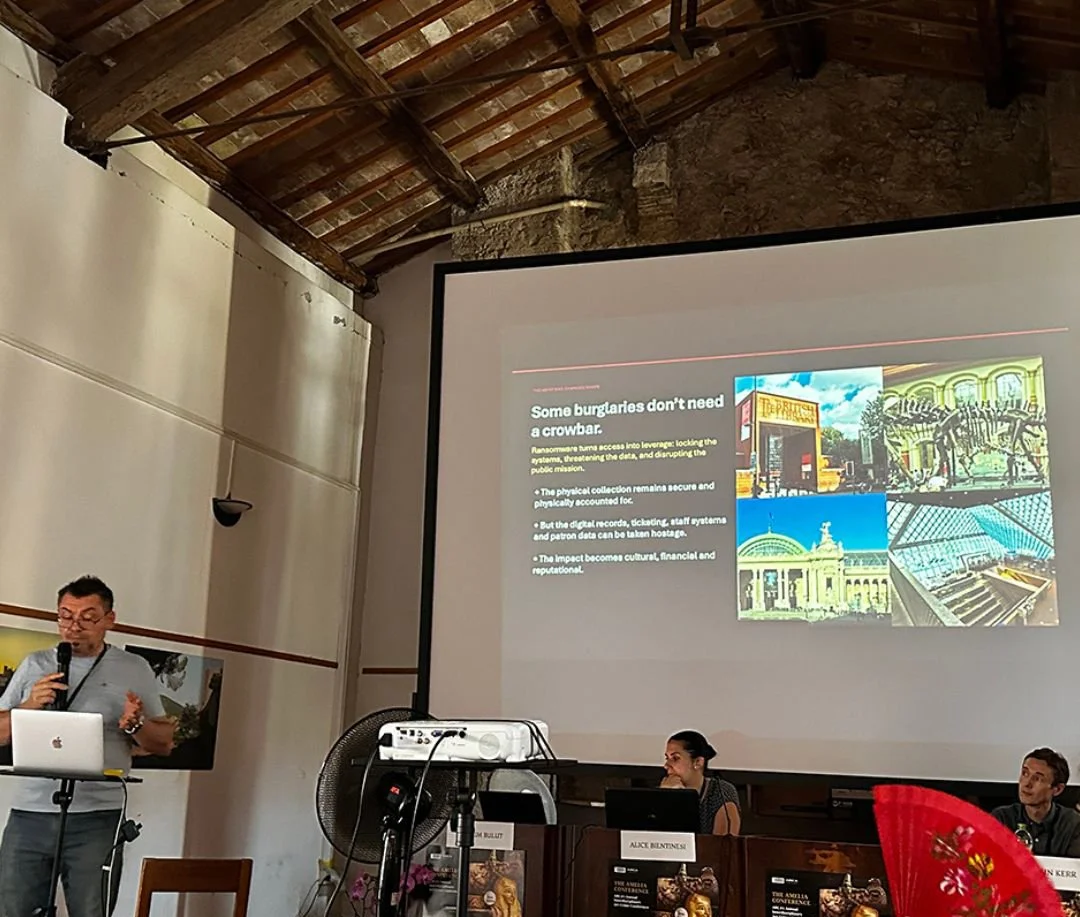
Security consultant Ibrahim Bulut's presentation, with a slide that says "Some burglaries don't need a crowbar"

Security consultant Ibrahim Bulut, from Expertise & Security Consultants in Belgium, presenting on computer attacks to cultural institutions.

The session I didn’t expect to love

One session that I didn’t expect to be riveting, but ended up blowing my mind, was a presentation by security experts discussing digital security.

When dramatic thefts like heists at the Louvre take place, we think about the physical security of museums, but did you know a depressingly high number of museums and cultural institutions have had their websites and databases attacked? Digital data breaches can lead to real world losses that are even more destructive than splashy heists, such as information held for ransom not being available for researchers around the world or, even worse, deleted data that opens the door for secret thefts of objects in museum storage.

“You don’t need a getaway car. You need a wifi password.”
— Security consultant Ibrahim Bulut
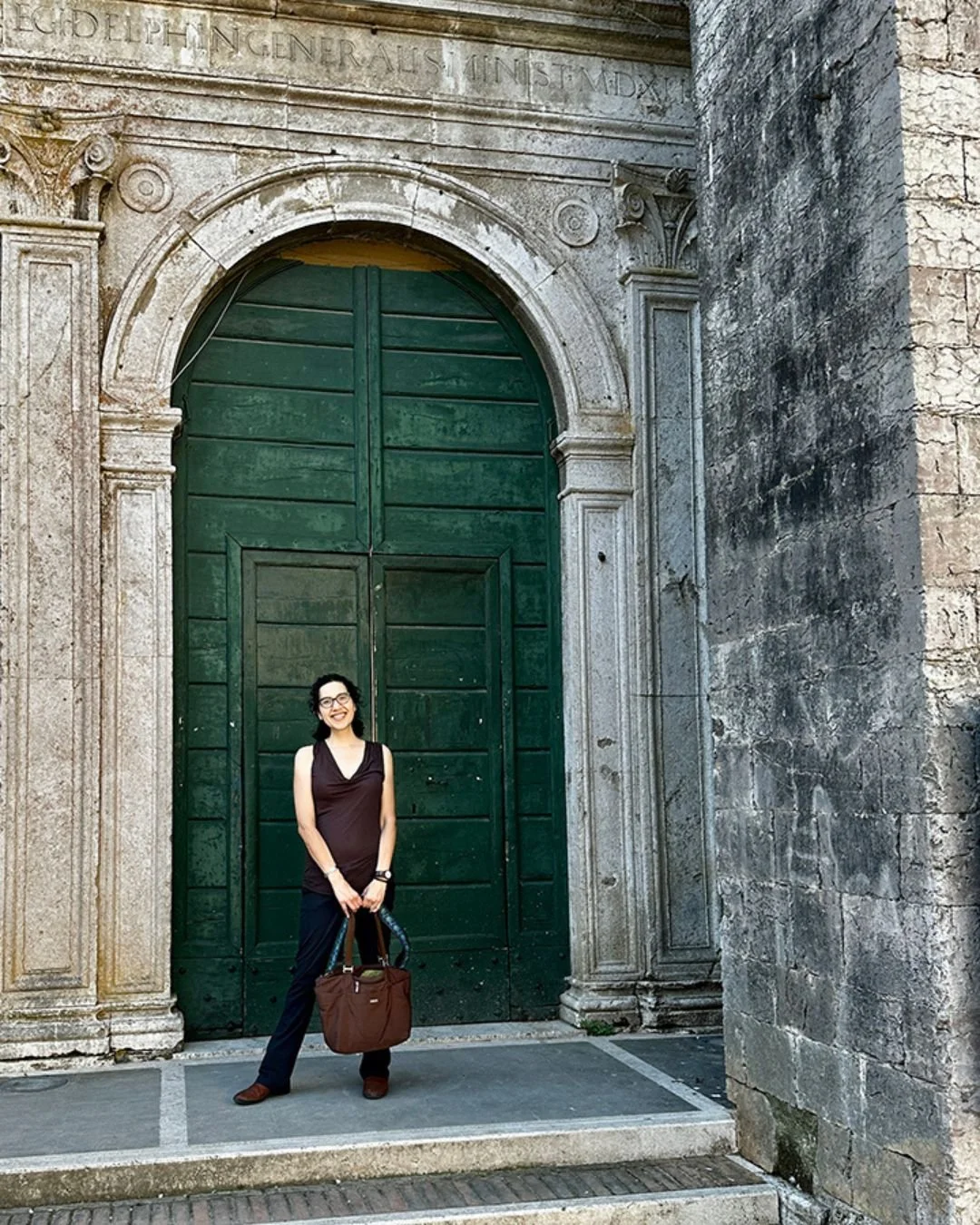
Author Gigi Pandian outside the tall green doors of the Collegio Boccarini cloisters in Amelia, Italy.

Gigi Pandian outside the door of the Collegio Boccarini cloisters in Amelia, Italy.

Other highlights

Other highlights included listening to a spirited panel discussion about the current state of provenance research (provenance is the history of an object’s location and ownership), learning of the Museum of Stolen Art that was created to help repatriate stolen religious art to Nepal, hearing about the challenges of modern authentication techniques, and having lunch with a member of the FBI’s Art Crime team.

At the end of the two-day conference, I had dozens of pages of notes that are sending me down additional rabbit holes of book research, and my mind was buzzing with story ideas.
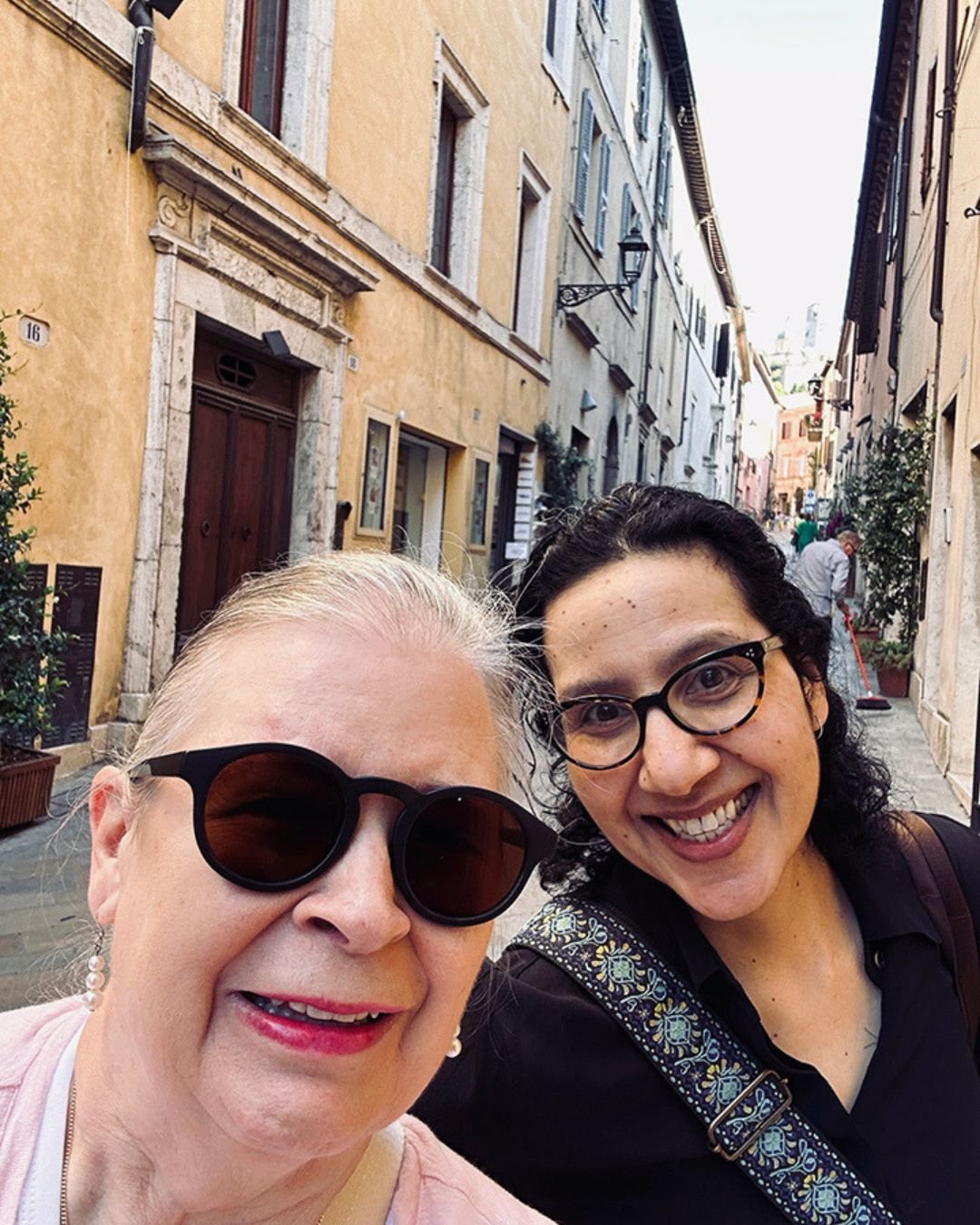
Stacy Allen and Gigi Pandian in the old walled section of Amelia, Italy.

Why a mystery novelist goes to these things

As much as I love learning about real world history and digging into archives, I was a terrible PhD student.

Why? Because I’m most drawn to the what ifs. In the real world, a missing work of art might stay lost for centuries and have a mundane solution to its disappearance. But in fiction? I can weave real cross-cultural history into a twisty mystery that takes my characters on an adventure that also has a satisfying resolution. In fiction, I can write the rewarding solutions and happy endings we don’t always get in real life.

So no, I never finished my PhD. But I proudly write escapist fiction. Life’s a lot more fun this way.

After the conference, I wasn’t quite done with Italy. I had some exploring to do.
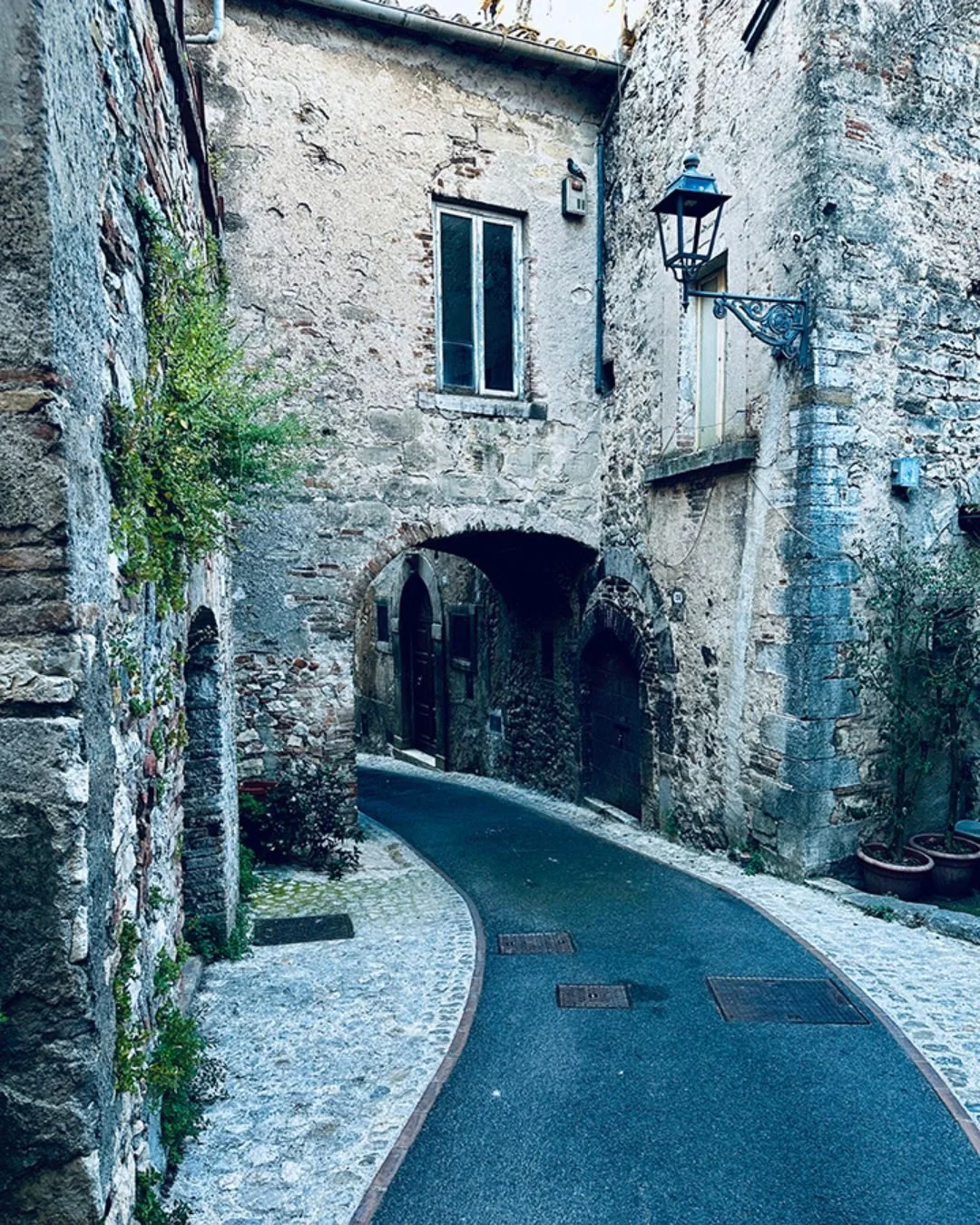
Old stone buildings and a winding path in Amelia, Italy.

One of Amelia, Italy’s narrow streets.
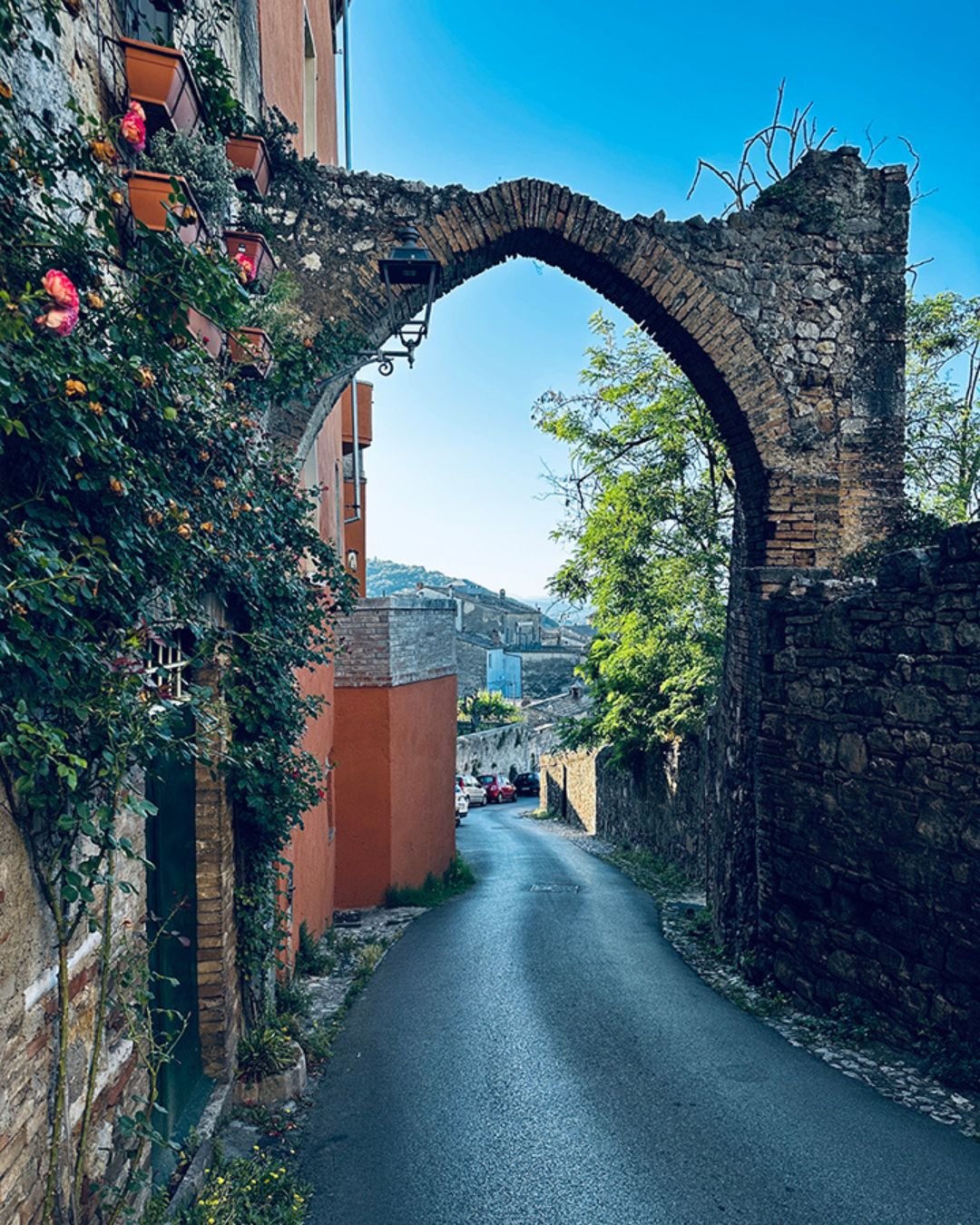
A crumbling old archway over a narrow paved road in Amelia, Italy.

Walking up to the top of the walled old town area of Amelia, Italy.
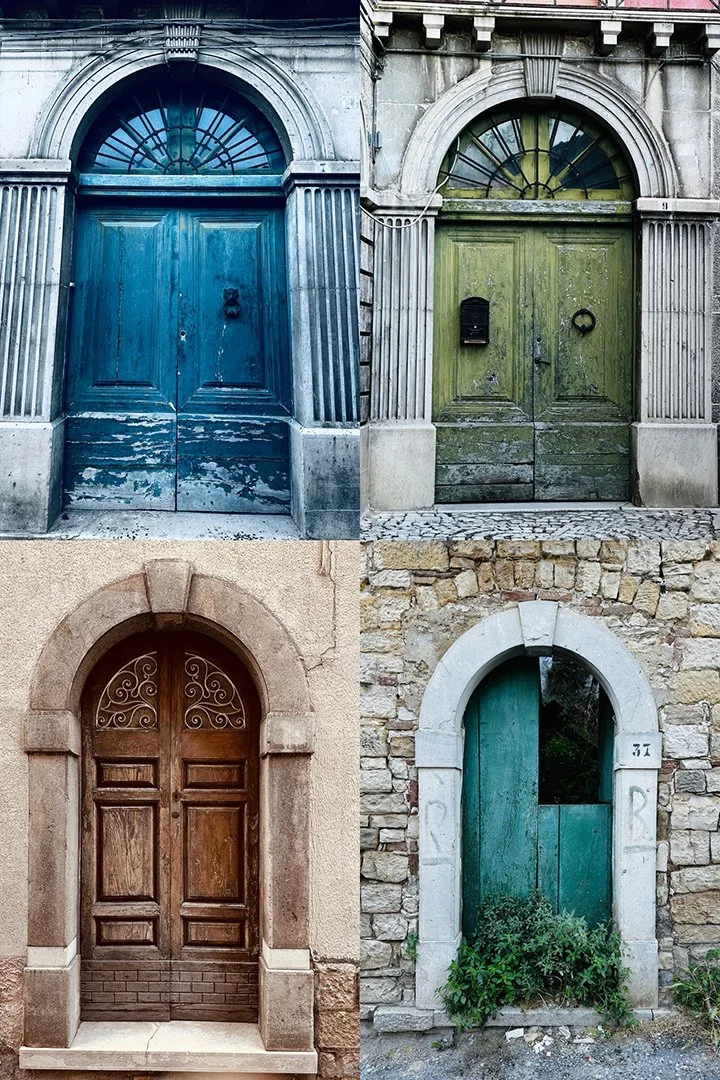
Doors in Castelmauro, Italy.

One last stop: The Park of Monsters

Before leaving Italy, I returned to one of my favorite spots in Italy: Bomarzo.

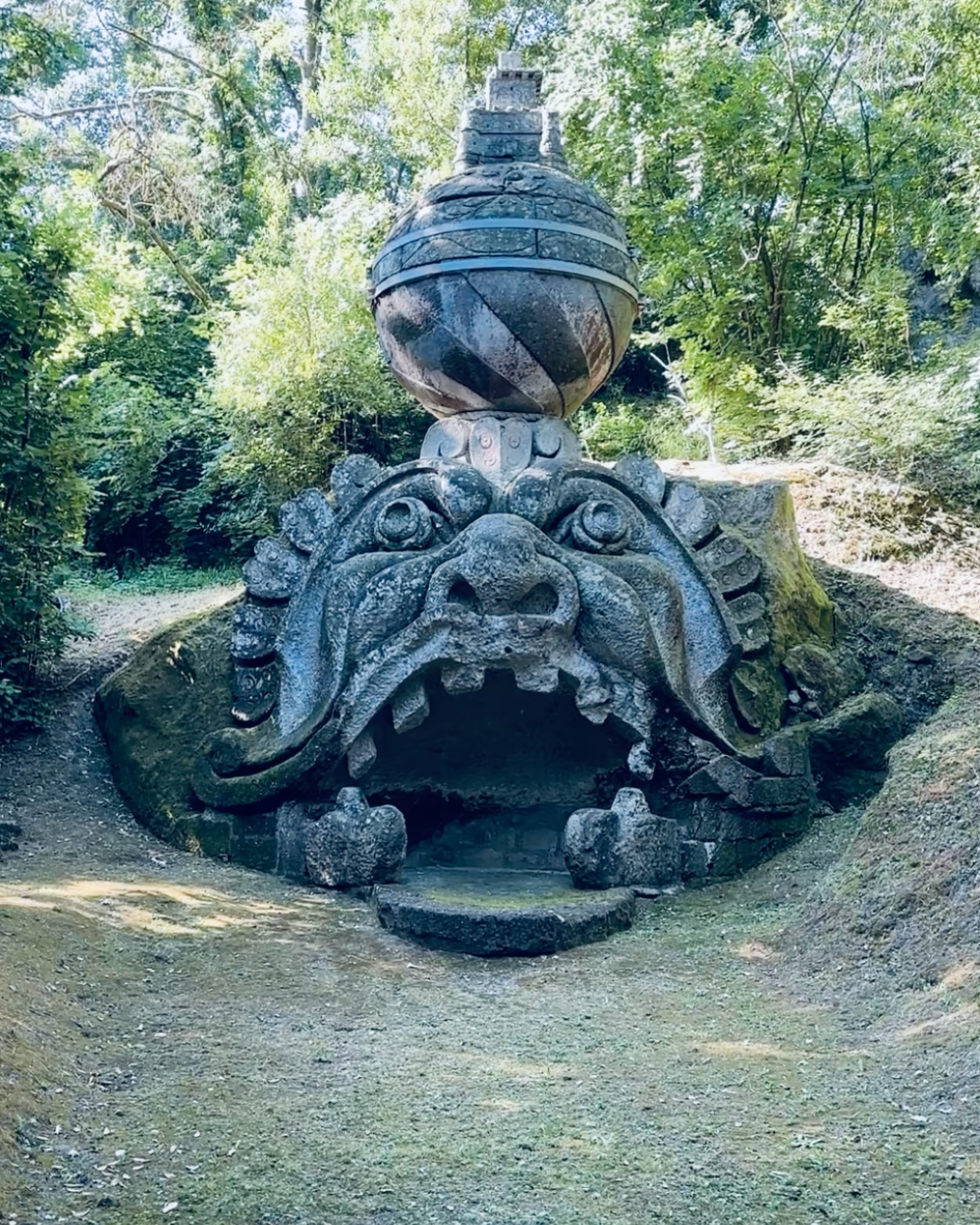
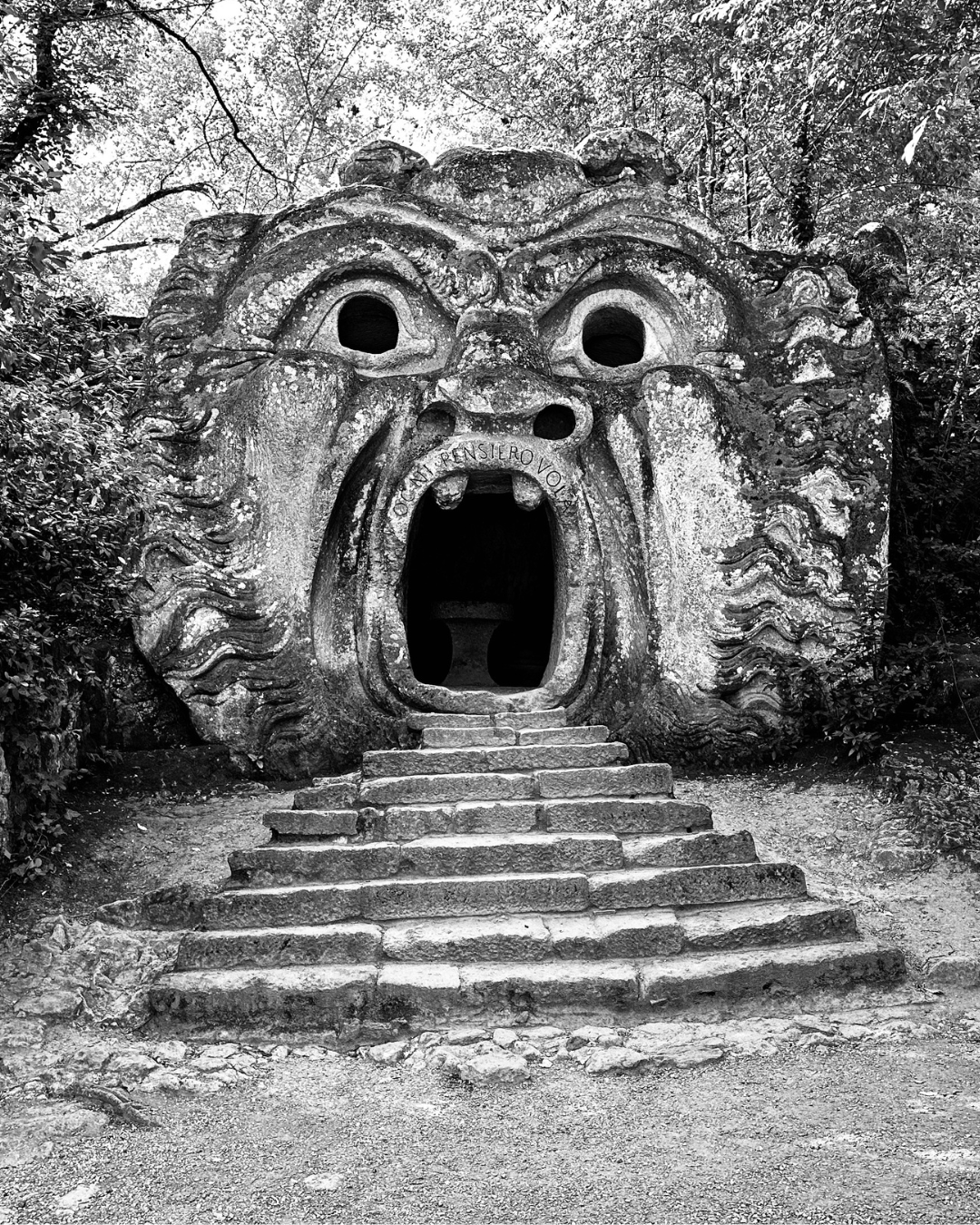
A decade ago, I set my novel Michelangelo’s Ghost in Bomarzo, Italy’s Sacro Bosco (Sacred Wood in English), more commonly called the Park of Monsters. I hadn’t been back in all that time, but on my last day in Italy, I got to spend the morning there. It was every bit as inspiring.
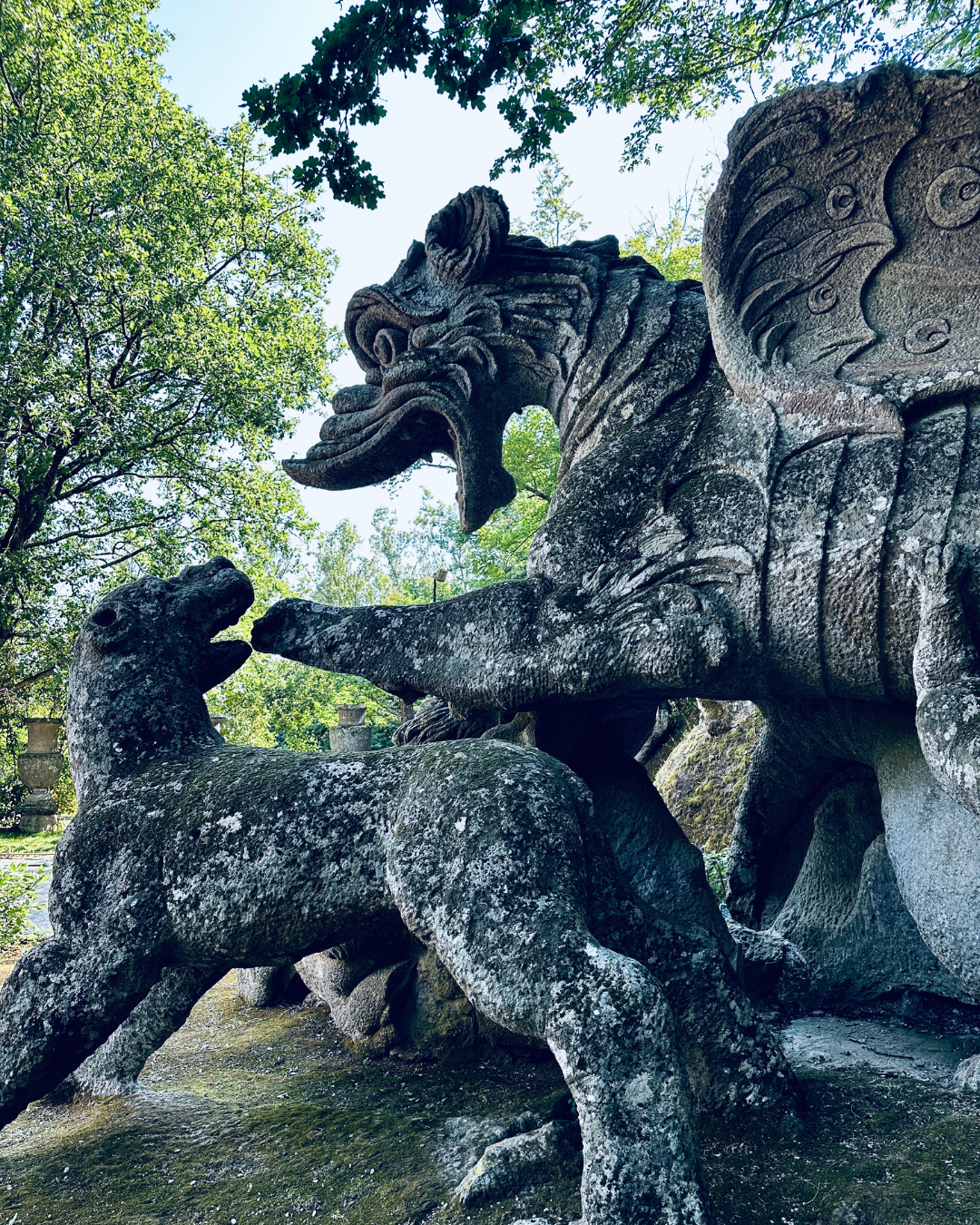
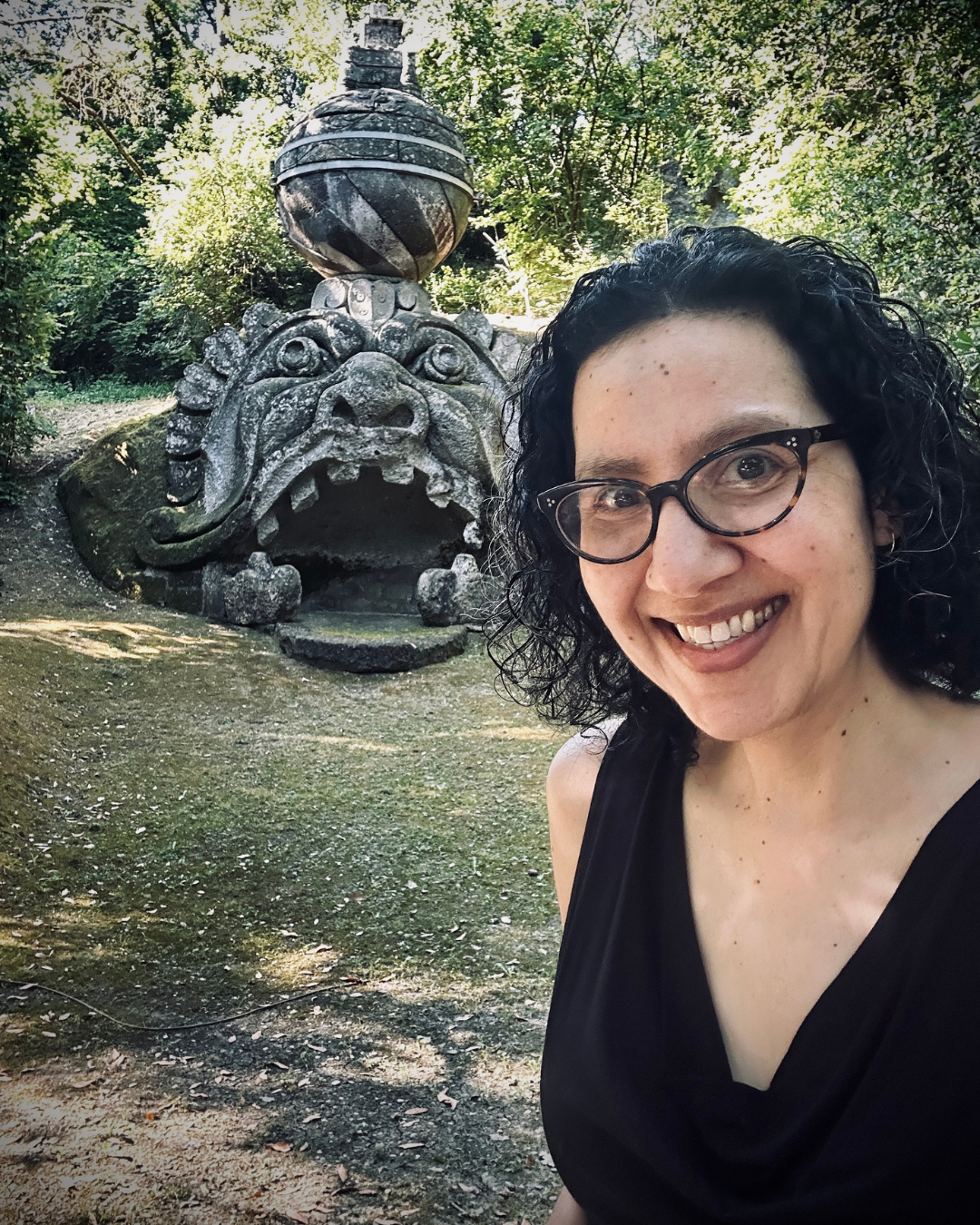
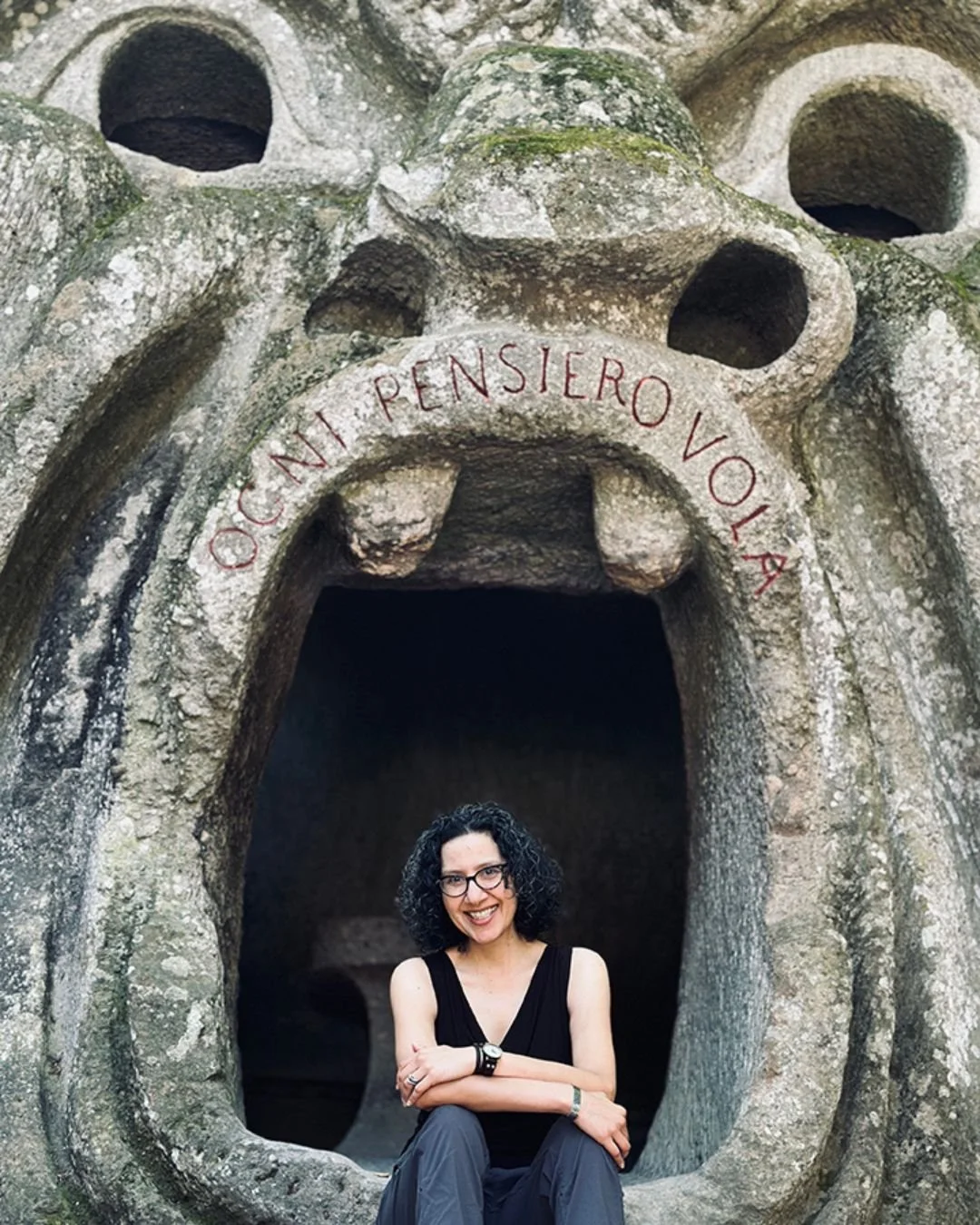
Gigi Pandian sitting in the mouth of a huge stone ogre in Bomarzo, Italy's Sacro Bosco Sacred Wood Park of Monsters.

Gigi Pandian in Bomarzo, Italy's Park of Monsters.

That time I was trapped in the Louvre during an art heist

By now, you’ve seen the news that on October 19, 2025, thieves disguised as a construction crew stole several pieces of the French Crown Jewels.

So today, I thought I’d tell you about the time I was trapped in the Louvre during an art heist. Yes, this a true story.

This week’s heist was the first time the Louvre museum in Paris was robbed since 1998. Back in 1998, a valuable painting by French artist Jean-Baptiste-Camille Corot was stolen. Here's the thing: I was there.

I was 22 years old and backpacking through Europe. May 3, 1998, was one of the Louvre’s free Sundays. The museum was ridiculously crowded. That's how the thieves got away with it. They pretended to be museum staff. They blocked off a small area and made off with the landscape painting.

Headline from a French newspaper from 1998: "Un Corot disparait du Louvre en plein jour" with a photograph of the stolen Corot landscape painting.

French newspaper clipping about the 1998 heist.

Back on that fateful day in 1998, I didn't know what was happening. After it was discovered that the Corot painting was missing from its frame, it was chaos at the museum. Were all ushered into the main hall, underneath the giant pyramid. The press reported that all visitors were searched. But that wasn't true. In the chaos, I and many other museum visitors were never searched.

So many of the visitors were tourists who were going to miss their flights, so average people were showing signs of distress. Pretty soon, the authorities were going to have a riot on their hands. With how many thousands of people were there that day, there was no way the authorities could search everyone.

That stuck with me, and I wondered… Could the thieves have been in the crowd with me—perhaps even pictured in my photographs?

Black and white photograph: A closeup of crowd at the Louvre Museum in Paris during the May 3, 1998 heist of a Corot painting, gathered in the main hall under the pyramid. Photograph by Gigi Pandian.

The crowd at the Louvre Museum in Paris during the May 3, 1998 heist of a Corot painting, gathered in the main hall under the pyramid. Photograph by Gigi Pandian.

Black and white photograph: A closeup of crowd at the Louvre Museum in Paris during the May 3, 1998 heist of a Corot painting, gathered in the main hall under the pyramid. Photograph by Gigi Pandian.

Closeup of crowd at the Louvre Museum in Paris during the May 3, 1998 heist of a Corot painting, gathered in the main hall under the pyramid. Photograph by Gigi Pandian.

At the time of that art theft, I didn't yet know I'd become a professional writer. But I'd already been inspired by movies like The Goonies and Romancing the Stone, and globe-trotting mystery adventure novels by authors like Elizabeth Peters and Aaron Elkins, so I was fascinated by being trapped in a situation that felt like it was straight out of those movies and books I loved.

When I became a mystery novelist several years later, I knew I'd write an art heist at the Louvre at some point. More than a decade later, I did it. 

In my Jaya Jones Treasure Hunt Mysteries, historian Jaya Jones solves present-day crimes linked to treasures from India’s colonial history. In Quicksand, she finds herself on the wrong side of an art heist at the Louvre, and she must travel across France, from Paris to Mont Saint-Michel, to both redeem herself and find a long-lost treasure.

I write cozy mysteries that have happy endings, so it’s not a spoiler to say that Quicksand ends with a mystery solved and a treasure found.  

We don’t yet know how this 2025 theft will play out, but as for that 1998 heist? Twenty-seven years later, the painting has never been recovered.

My Successful Query Letter

PW2018-Mentor-Adult-274x300.png

This year I'm participating in Pitch Wars, an incredible mentoring program for aspiring authors—which you can learn more about here. I'm serving as a Pitch Wars 2018 mentor, and one of the things the team thought would be helpful was for us to share our successful query letters with you. Here's mine!

Dear [agent],

It was a pleasure meeting you at the [X Writers Conference]. We spoke after your mystery writing panel. My 85,000-word mystery novel ARTIFACT is currently a finalist in the St. Martin's/Malice Domestic Best First Traditional Mystery competition, and was awarded a Malice Domestic Grant. [X editor] from St. Martin's made me her "Editor's Choice" pick at the [X Conference], and is interested in reading ARTIFACT even if it is not selected as the winner of the St. Martin's competition. 

Jaya Jones was born in India to an Indian mother and American father. Now a historian in San Francisco, she receives a mysterious package containing a jewel-encrusted artifact, sent by her ex-lover the same day he died in a supposed accident. Jaya soon discovers that the secrets of a lost Indian treasure may be hidden in a Scottish legend from the days of the British Raj. And she's not the only one on the trail.Jaya's quest to catch a killer and find the treasure takes her from San Francisco to London to the Highlands of Scotland. Helping her decipher the few cryptic clues she possesses are a devastatingly handsome art historian with something to hide, and a charming archaeologist running for his life. Evading a shadowy stalker, Jaya follows hints from the hastily scrawled note of her dead lover to a remote archaeological dig along the windswept cliffs of Scotland. When a member of the crew is murdered, she must figure out which of the scholars vying for her affections might be the love of her life—and which one is a killer.

The first in a proposed series, ARTIFACT introduces a new headstrong heroine for fans of Elizabeth Peters' adventure stories, but with a modern twist. Jaya is an Indiana Jones for the 21st century.

A bit about me: I'm the child of two cultural anthropologists, one from the southern tip of India, the other from Albuquerque, New Mexico. I spent much of my childhood traveling, and I have lived in all the countries where ARTIFACT takes place. I'm on the board of Sisters in Crime's Northern California Chapter, and am a member of Mystery Writers of America and Romance Writers of America.

This is the letter that led to multiple agents being interested in the book, and that helped me sign with the amazing Jill Marsal of the Marsal Lyon Literary Agency, who I've been with ever since.If you're querying agents, good luck!

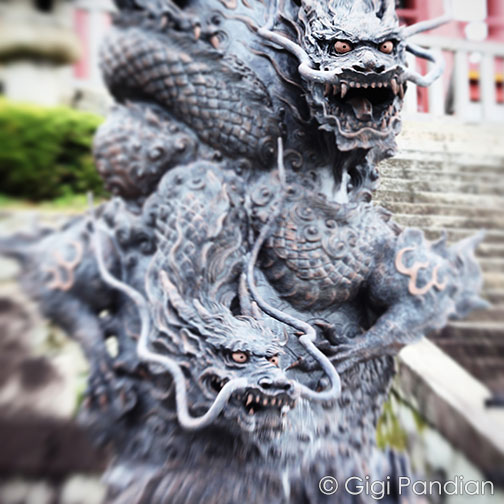
Japanese Gargoyles (Onigawara)

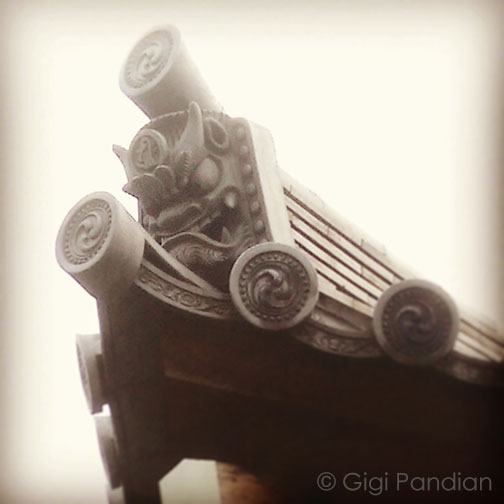
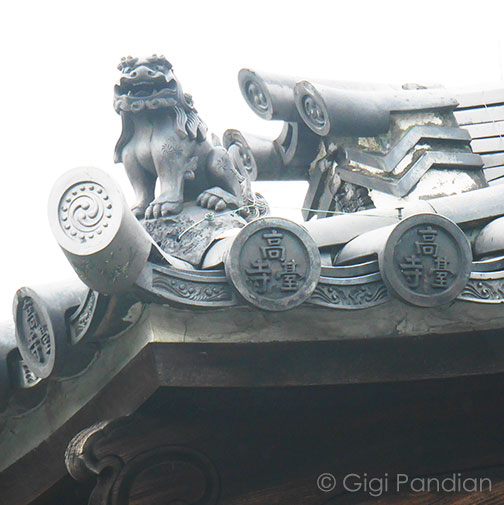
As part of my research for the fifth Jaya Jones novel, I visited Japan. I'll share much more about that experience when the book comes out next year, but in the meantime here are a few of my favorite photos from the trip, beginning with onigawara — Japanese gargoyles!

Oni means demon, and onigawara means demon tile. These carvings adorn Buddhist temples and other buildings, much like European gargoyles adorn both Christian churches and many other buildings. 

Sanjusangendo Temple, Kyoto

Sanjusangendo Temple, Kyoto

Kodai-ji Temple, Kyoto

Kodai-ji Temple, Kyoto

Kiyomizu-dera Temple, Kyoto

Kiyomizu-dera Temple, Kyoto

Dragon head at Kodai-ji Temple, Kyoto

Dragon head at Kodai-ji Temple, Kyoto

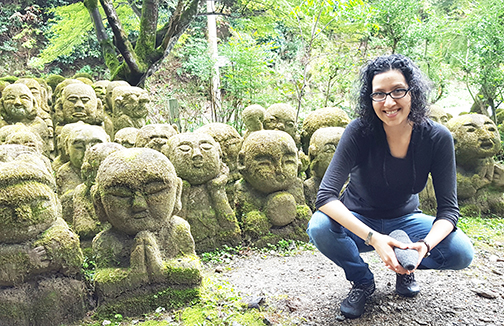
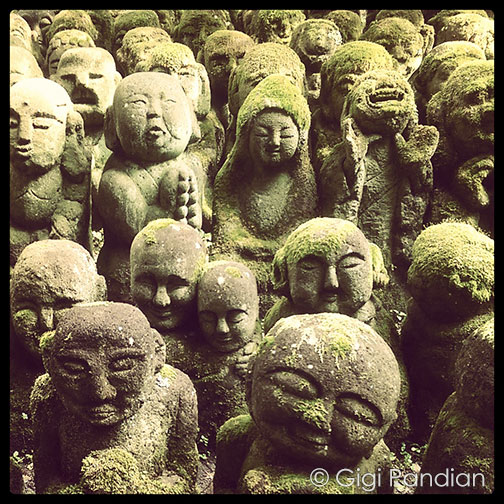
And these aren't onigawara, but this was my favorite temple I visited: Otagi Nenbutsu-ji on the outskirts of Kyoto, past the famous bamboo forest. More than a thousand statues were carved by hundreds of people, many of whom were amateurs, but the figures they created show such character and humanity.

For some reason this magical place is off the beaten path, so we had it all to ourselves for almost half an hour. If you find yourself in Kyoto, I recommend the extra effort to get here.

And I'll end with a couple more of my favorite photos of Kyoto. The Jaya Jones novel set in Japan, The Ninjas Illusion, comes out in the fall of 2017.

Dragons at Kiyomizu-dera Temple

Dragons at Kiyomizu-dera Temple

Autumn in Kyoto

Autumn in Kyoto

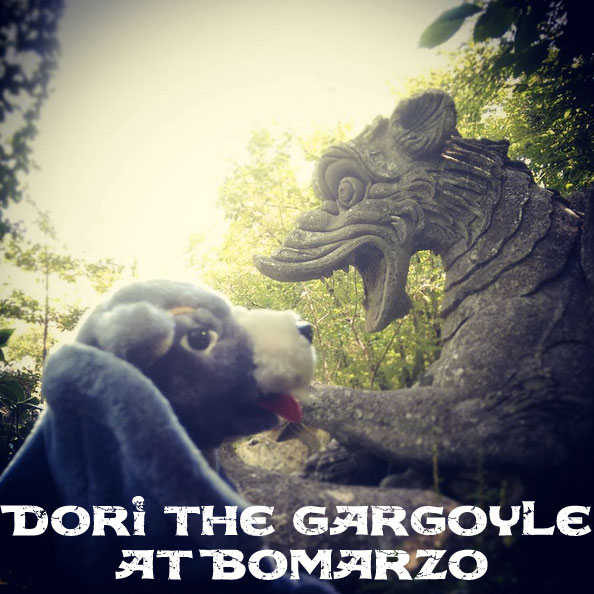
Research for Jaya Jones Book 4 in Bomarzo, Italy

I recently returned from Europe, where I made three detours to work on my next two novels.First, the Renaissance "Park of Monsters" in Bomarzo, Italy. I got plenty of history and inspiration wandering through the labyrinthine paths of the macabre garden. I'm still in the middle of my research, so I'll let the photos speak for themselves. Oh yes, Jaya is going to have a grand adventure here...

Ex-pat mystery novelist Linda Lappin generously invited me to tea at her home, near Bomarzo -- which happened to be inside the walls of a Medieval Tuscan village! Linda is the author of the novel Signatures in Stone, set at Bomarzo. That's how we happened to meet online. I found her book when I was reading up on Bomarzo, and I greatly enjoyed it so I posted my review on Goodreads. Linda noticed it, and when she learned I was working on my own novel set at Bomarzo, she sent me links to resources, and then invited me to her home on my trip Italy.

In addition to Linda’s marvelous hospitality, I love the fact that GPS couldn't give directions inside the old car-less walled city, so she had to write out detailed instructions so I could find the place.

The last detour was Paris. I wanted to fact check a few things for the third Accidental Alchemist novel I'm working on (yes, I know the Internet exists, but this was more fun). I wasn't seeking out Rue Nicholas Flamel for my research, but I stumbled upon it on my last day in Paris. Time to get back to work on these books now.