Five Tips from Boot Camp for Self-Publishers

On this week's President's Day holiday, I attended Self-Publishing Boot Camp in San Francisco. I've already done a significant amount of research into the best ways to publish my books myself, but aside from attending an ebook panel put on my my local Sisters in Crime chapter, my research has primarily been online. Since I'm publishing Artifact: A Jaya Jones Treasure Hunt Mystery in both ebook and print formats, I wanted to hear and speak with people in person to fill in the gaps in my research.

The workshop was led by Carla King, who has been self-publishing since 1994. I heard about it through one of the speakers, Joel Friedlander, aka The Book Designer, who has a terrific blog about making the right choices if you're going to publish your books yourself. Even though I already knew a lot of what was covered that day, successfully publishing your books yourself is such a big undertaking that I still learned a lot.

My top 5 take-aways from the day:

1. It's the Wild West out there in publishing right now. 

Whatever is true today might be totally different three months from now. While I already knew that, what I realized at the workshop was that the great thing about this uncertainty is that it's also an exciting time to experiment. When you're publishing independently, you can learn new things and change course at any time. Try what you think is best right now. If it turns out it's not working out as you expected, try something else.

I'm letting go of the idea that I need to get everything right. I'm learning as much as I can, having some fun, and I'll see where that leads. 

2. Once you've decided to go the indie route, what do you do first? Set goals. Specific ones.

Ask yourself what you want out of publishing your book(s). Once you figure that out, that's when you'll be ready to think about strategy.

My own goal is to have fun writing a whole mystery series. I'm in this for the long haul, so I need it to stay fun and not use up all of my energy. Otherwise it won't be worth it to me to stick with it. Therefore I'm not going to spend time doing things I don't enjoy. For example, I decided I'm going to pay someone to do my ebook formatting, because that expense is more than worth it to further my personal publishing goal. But if my goal had been to maximize profits as much as possible so I could quit my day job, paying someone to do something I could learn to do myself wouldn't necessarily be a good strategy.

3. The stigma of self-publishing is fading, but you still need to package your book in a way that looks professional and appropriate to your genre. 

People do judge a book by its cover. But it's not enough to simply have something you think is beautiful. Study book covers in Amazon's Top 100 lists in your genre.

As graphic designer, I've been having fun playing with cover design options. Some of my ideas have been really fun, but I realized how important it is to stick with genre conventions. I'm going to have a cover I love, but it's also going to be one that immediately tells my audience this book is for them.

4. Decide which parts of the process you need help with. No, you can't do it alone.

Through ebooks and print-on-demand technology, publishing independently has become less expensive, but it's still not free—not if you want to do it well.

Does your book need an editor? Unless you have the world's greatest critique group, the answer is yes. Do you need a book cover designer? Unless you're a designer or have an eye for design, the answer is yes. Do you need someone to format the interior of your book? Maybe, maybe not; it depends how much time you want to spend learning how to do it. Do you want to buy your own ISBN numbers? Do you want to print copies of your book to give away? The list goes on—and I'll talk more about my own specific decisions in a future post (which I'll write just as soon as I'm done with my own book design!).

5. Build your author brand. Not a book, not a cute handle, but YOU.

People who've promoted themselves as clever names that aren't their own often regret it later. Carla King gave the example of herself. On Twitter and in some other places, she's MissAdventuring. Cute, but many people won't remember MissAdventuring is Carla King.

And unless you're planning on writing just one book, you don't want your identity to be completely tied up with your first book. Some people use their book covers as their social media image, but a head shot of yourself that you use everywhere will allow a better connection to your readers.

I had been debating how much to use my "Gargoyle Girl" brand. I'm still going to use it for my business name and my mysterious photography blog, but I'm not going to use it in place of my name. I had previously wondered if I should Tweet as Gargoyle Girl, but I'm glad I stuck with @GigiPandian.

Before the workshop, I'd been suffering from a bit of information overload. But now that I've thought more seriously about my goals—to have fun writing the Jaya Jones Treasure Hunt Mystery Series along with some locked room mystery short stories, connect with readers and other writers, and to structure my life in a way that allows me to keep writing—I'm back to having fun with this crazy undertaking.
10 Things I Wish I'd Known About Wigs Before Starting Chemotherapy

I'm one of those people who's good at staying positive. But when I learned that in addition to having cancer I had to go through chemotherapy and lose my hair, I wasn't happy. It turned out I was needn't have worried. It wasn't nearly as bad as I thought it would be. There was even some fun to be had.

Since I've been going through this experience, a lot of people have asked me all sorts of questions about wigs. Six months ago, I knew nothing about wigs. Now I've learned so much that I thought I'd share everything I wish I'd known when I began the process.

Here are the ten things I wish I'd known about wigs before starting chemo:

1. You don't need to spend a fortune to buy a wig everyone thinks is real.

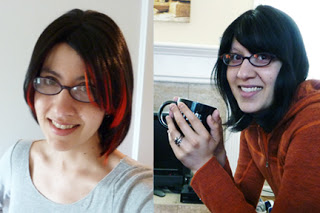
Wigs made of real hair, which are more expensive, seem to last longer than synthetic ones. But inexpensive wigs can look just as good. I was worried I'd have to invest in a super-expensive wig to feel comfortable leaving the house, but that didn't turn out to be the case at all. What do you think? Can you tell which is real?


2. The cost of buying wigs. 

Some insurance covers the cost of a good wig if you have to have chemotherapy. The American Cancer Society also offers a free wig to cancer patients, that you can select in person at your local office. Beauty stores offer a range of wigs. My wigs cost between $35 and $250. My favorite cost $60.

3. What to expect at the wig store. 

I bought my wigs at beauty stores, which stock lots of wigs and have knowledgeable saleswomen. You'll need to wear a nylon stocking cap when you try on wigs, and all the stores I visited charged around $2 for the wig cap. Many beauticians can also trim your wig so it better fits your face.

4. Take your friends with you when you go wig shopping.

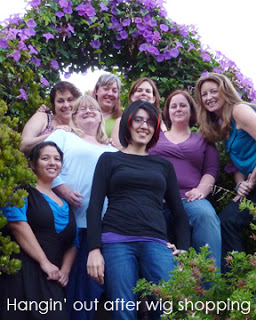
Taking your friends with you is great to turn the experience of temporarily losing your hair into something fun. It also has the added bonus of letting your friends pick things out that you'd never select for yourself. My friends were so right!

5. How to get a good fit. 

I initially imagined it would be necessary to get a custom-made wig, or at least to measure my head to get the right size. I learned that neither was necessary. Wigs have sizing straps so that you can adjust the size on your head. There are also cut-outs that fall above your ears to make it easy to put the wig on straight. Not all wigs will fit you, though, so you'll still need to try them on.

6. How to get a comfortable fit. 

That stocking cap you used at the store to try on wigs can help if your scalp is sensitive and the wig feels itchy. I didn't find that to be the case most of the time, but it was nice to have some nylon stocking caps when I wanted one. I was also given a silicone wig strap that was meant to keep a wig in place, but it didn't work well with my glasses. That didn't turn out to be a problem either. If you've correctly used those sizing straps on the inside of the wig, the wig doesn't move at all throughout the day. (I live in California, though, so I haven't tested this in bad weather conditions.)

7. If your doctor says you'll lose your hair, go ahead and cut it short before that happens.

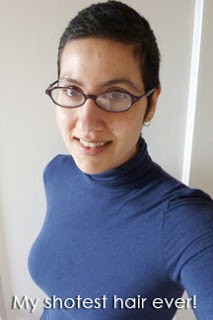
Having short hair will make it less traumatic as your hair thins. It also lets you try out short hair styles so you can see what you might like to do while your hair grows back out. I tried out two lengths of short hair. Surprisingly, super-short looked pretty damn good.


8. Buy more than one wig.

You're going to need to wash your wig, so even as a practical matter it's a good idea to have more than one. Some wigs will also become worn around the edges (I found it to be the less expensive ones), and it's much easier to purchase an extra wig before you start feeling poorly. And the biggest reason to buy more than one wig? To have fun with the experience.

9. Yes, you want to have some fun with your wigs. 

I had the same long curly hair for twenty years, from age 16 to 36. It worked for me, so I had no reason to change it. I only changed because I was forced to do so. But now I know I don't have to keep that style to feel like myself.

10. Go with your gut. 

Regardless of what anyone else says, you'll know when you've found the wigs you feel happy with. I tried on some wigs that might have technically looked good on me, but they didn't feel right. I got the ones I loved, and that's one of the reasons this challenging year has gone by as quickly as it has.

Of Schedules and Short Stories

A few days ago I was feeling frustrated that I was falling behind on my list of tasks to set up Gargoyle Girl Productions (for example, it still has no website). Having radiation EVERY DAY this month has put a crimp into my days. But I reminded myself that one of the reasons I wanted to publish my books myself was for this very reason: so I could be on my own schedule regardless of what health issues I might be facing. But… it still felt frustrating!

Trying to follow my own advice, I threw my schedule out the window. The next morning, I woke up with freedom. And I knew exactly what I wanted to do with it. For the last couple of months, there's been a short story idea bouncing around in my head. I didn't think I had time to write it.

This week, I'm writing that story.

I knew this idea should be written as a short story, rather than a novel, because the idea centered around a locked room mystery. In "locked room mysteries," also called "impossible crime stories," the whole idea is based around the twist that makes it possible for a seemingly impossible crime to have actually occurred—such as a man found dead inside a windowless room locked from the inside with no possible way for anyone to have escaped. Locked room mysteries provide a great twist, and in a short story, a twist is key.

I've loved these types of puzzle plots since I was a kid. They're so fun in part because they're fair play mysteries, where the reader has all the clues they need. They're also fun because you know you're in for a satisfying resolution at the end.

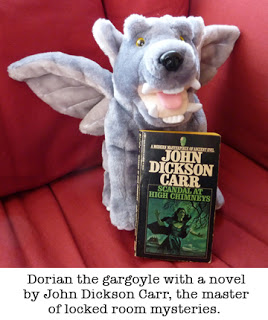
There are novels that feature locked room mysteries—John Dickson Carr, the master of locked room mysteries, wrote many of them—but in a short story the focus can be on creating everything that leads up to that "ah ha!" payoff moment. When I have an idea for a locked room twist, the pieces fall into place for me as a short story.

Time to get back to writing that twist.

12 Resolutions for 2012

Last week I wrote about 11 lessons from 2011, so now it's time for 12 resolutions for 2012.

Actually, there's really just one big resolution I have for 2012, but it can be broken down into 12 smaller pieces. Last year wasn't such a fun year. This year, I resolve to have fun. 

1. Make sure writing stays fun. As I move from writing mode to publishing mode, I can see how easy it would be to get caught up in the stress of relentless promotion. But you know what? I'm not going to do it. Yes, I'm going to put in a bit of time researching book review venues and I'll tell people about my books. But when I come across something that sounds more stressful than fun, I'm not going to do it. If that means I sell fewer books, so be it. That's not what I want my life to be about.

2. Be a tourist in my own town. I can't travel as much as I want to this year, but I can have fun exploring locally. I'm going to take advantage of all of the things around me in the San Francisco Bay Area. Anyone up for a trip to the Asian Art Museum's current maharaja exhibit?   

3. Cook delicious healthy food. I'm on a health food kick to make sure my cancer doesn't return. There's no reason food can't be healthy and delicious. It's no fun to eat bland food, so I'm going to figure out all the delicious recipes that are also good for me. I've already discovered that kale and avocado salad is heavenly. I'm serious!

4. In August, I'll publish my first mystery novel, Artifact. The launch date coincides with when I'll be finished with my main cancer treatments. It's been a long journey getting here, so I'm really excited. Artifact is the first in the Jaya Jones Treasure Hunt Mystery series. Here's a short teaser: When historian Jaya Jones receives a mysterious Indian artifact sent by a dead man, she discovers the secrets of a lost Indian treasure may be hidden in a Scottish legend from the days of the British Raj. More details about the book can be found here.

5. Finish editing the second book in the series. I made myself cry when I wrote one of the scenes in this book. That had never happened to me before with something I'd written, so I can't wait until I have time to finish editing this book.

6. Parle Français. After stalling out at intermediate French, I'm going to try out Rosetta Stone's higher level courses. When I'm in France, people usually switch to English as soon as they hear me speak, because my French is so bad. The next time I make it back there, it would be great fun to be able to converse with people in French. Wish me luck!

7. Send more physical letters. The post office is dying, I know. But we're all dying, so why not go out with a bang? Until mail dies, I'm going to send more fun letters, like the mail from a Mail Art workshop at the San Francisco Center for the Book (at right). 

8. Keep Twitter fun. There's one school of thought that says it's good etiquette to follow everyone who follows you, and there are even apps to help you un-follow everyone who hasn't followed you back. That doesn't make sense to me. I follow Neil Gaiman. He's never going to follow me back, but who cares? I really enjoy his tweets, so why would I want to lose that? When I only have a few minutes, I check out my list of friends and chat for a minute. If I have longer, I check out the rest of the people I'm following and do some tweeting and re-tweeting. But I'm never going to want to spend enough time on Twitter to follow the thousands of people I see some people following. I'd only be faking it to gain more followers in return, which isn't right for me. I do follow new people, but not as an automatic reflex. Everyone can use Twitter in the way that feels right to them, and keeping interactions with people fun rather than strategic is what's right for me.

9. No Facebook. I'm still not going to join Facebook. I get that it could be a venue for exposure, since I have a book coming out. But it has never seemed fun to me. I haven't given in to peer pressure thus far, and this isn't the year to do so.

10. Keep a sketchbook. I keep various notebooks, but always mean to keep a more general notebook/sketchbook. It's funny, but I think that of all big resolutions I've got here, this will be the hardest one to see through.

11. Wear high heels more often. I stole this fun resolution from Nicole Peeler. I don't mean uncomfortable heels. I mean heels like my rubber-soled Fluevogs (at right) that are both cute and comfy. I'm six feet tall in heels, which I gotta say is a lot of fun.

12. Write more blog post lists! I have fun structuring things into lists. It's a form that works well for me. So stay tuned for a year of some lists.

11 Lessons from 2011

2011 was a crazy year for me. In spite of everything, 2011 is finishing up even better than it began. Here are 11 things I learned in 2011:

Gigi with her dad in India.
1. Writing a novel always takes longer than you think it will. After a late 2010 trip to India, I thought it would be easy to finish up the second book in my Jaya Jones Treasure Hunt Mystery series, much of which takes place in India. Ha! It was June before I gave it to my agent. 

2. Conventions and conferences are worth the expense. I'm not talking strictly about monetary calculations, but rather about life experiences. My non-writer friends and family are supportive of my quirky writing habits, but they don't really get it. Hanging out with inspiring mystery writers at Left Coast Crime in Santa Fe in March got me re-energized to finish the above-mentioned novel. I was also on my first panel, and it was exciting to have attendees come up to me afterwards to tell me they looked forward to buying my book once it was out. 

3. Being Zen about changes of plans is the way to go. I'm a planner, both in life and when it comes to writing. I was planning on attending Thrillerfest for the first time, but a week before I was set to fly to New York, I was diagnosed with breast cancer. I had to cancel all of my upcoming travel plans. The only way I could imagine getting through the rest of the year was to let go of the desire to continue life as usual. Thus began my crazy cancer summer.  

4. Wig shopping is best done with friends. I could have been secretive about going through chemotherapy and needing to buy wigs, but that's not my style. I'm so glad I brought my friends wig shopping with me. They picked out wig styles I never would have selected myself, but they were so right! (I've had enough people ask me for details about buying wigs that I'm going to do a separate blog post about it in the new year.)  

5. Chemotherapy isn't as scary as it is in the movies. I was so relieved this was the case. It wasn't fun to to be poisoned for the greater good, but thanks to modern medicine, drinking plenty of water, getting plenty of sleep, staying active, and remaining connected through the internet once my immune system dropped, I was able to get through it while accomplishing more than I thought possible (more on that below). 

6. Good friends, a great husband, and Victoria Laurie's Ghost Hunter mysteries are all fantastic ways to get through individual chemotherapy sessions. How did I miss out on Victoria Laurie's amazing mystery series until now? I have no idea how I missed it before, but I'm glad I found it at the exact time that I needed a new series to entertain me for several hours every few weeks. And while I didn't exactly take the people in my life for granted before, I certainly have a greater appreciation for them now.

7. Cancer can help you see what you want in your life. For me, I could see it was the right time for me to publish my mystery novels myself. I won't regurgitate what I already wrote about here, but point is that I'm no longer bound to doing what I'm "supposed" to do. I was able to see what was right for me, and not to worry about what anybody else thought about it. And I knew exactly what I wanted to do: spend more time on my creative passions—photography, art, and writing—in ways that were meaningful to me. Thus Gargoyle Girl Productions was born.

8. Setting a long-term dream goal can keep you grounded. In addition to my creative passions above, another passion of mine is travel. It's not something I can do this year, but I found that looking forward to traveling once I was better made me all the more committed to helping myself get well. In addition to planning individual trips starting next year, I decided I'd start saving up for a three-month round-the-world trip for my five year anniversary of being cancer-free.
    9. While stuck at home due to an illness, only watch TV when at your most tired. We got cable TV once I found out about the treatments I needed for my cancer. It was definitely worth it for those days when I was tired. But as soon as I felt better a couple days after each chemo treatment, I grew antsy and felt there was something I could be doing besides watching TV. I went back to work remotely, formed Gargoyle Girl productions, and wrote a draft of an experimental new novel.

    10. However busy you think your life is, NaNoWriMo can be done. I wasn't sure if I could complete the 50,000-word challenge of National Novel Writing Month this year, but those tend to be the times when we're most successful, right?

    11. Remember to not take things for granted in 2012 and beyond. It's easy to go back to life as usual, but I'm resolving to remember to be grateful for all of the things in my life. Like coffee. Oh God it's good to be done with chemo and be able to drink coffee again.

    Happy New Year!


      Post-Chemo and Post-NaNoWriMo Updates

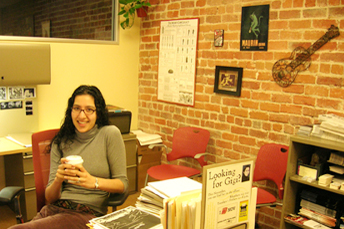
      Now that the chemo drugs are out of my system and my immune system is back up, I've gone from working from home to being able to be back in the office part time! I love my office. Yes, I love my beautiful brick wall (shown below), but I'm mainly talking about my coworkers and the projects I get to work on as a graphic designer. While I drew a short straw on the health front, I lucked out with a dream job. That makes it much easier to count my blessings instead of feeling sorry for myself.


      It's been three weeks since I completed National Novel Writing Month, and I haven't written a word of fiction during that time. Some people (perhaps Rachael Herron and Sophie Littlefield) might think I'm crazy for not feeling the need to write every day. But then again, some people (definitely Catrina Chaos) think I'm crazy for wanting to write novels in the first place. Me? There are some ideas and characters I can't get out of my head, so I need to write them down. But every day? Not so much. NaNoWriMo helps me get down my ideas in an efficient and fun manner, which is why I love it.

      Now that I've written down my latest set of ideas, it's time to turn to my publishing plans. And there's a lot to do. Forming a company and publishing your own work isn't for the faint of heart. My list of things to do keeps growing longer. It seems like each time I finish one thing, I think of three more items to add to my list!

      I'll do a proper publishing update in January, once I've completed a few more items on my list. For now, I hope everyone is having a wonderful holiday season! 

      Five Reasons You Should Finish Your NaNoWriMo Novel Even If It Sucks

      A funny thing happened to me on the third day of November: I realized I was writing the wrong book. My heart wasn't in it. So four days late, I began writing something new. I'm still behind on my word count due to this switch, but now I'm writing something I know I can finish. Why does that matter? I'll tell you why.

      1. Finishing is the most important part of writing a novel. Period. Sure, there are many important pieces to a novel. But if you never reach the end, none of those other things will ever matter. I first participated in NaNoWriMo back in 2004. I'd toyed around with writing a mystery novel before, but it was NaNoWriMo that made me type "the end" for the first time.

      2. If you live a normal busy life, there's never a good time to write a novel. In November, you have the collective energy of thousands of other people around the world doing the same thing. If you want to write a novel, now's the time to try it. If you signed up as an official participant, you even receive helpful pep talks.

      3. It's good to learn the lesson "Don't get it right, just get it written." When I first started writing, I waited for the right words to come to me. That's a surefire way to finish one book every twenty years. It's a hell of a lot easier to edit a bad scene into a good one if you've already written down a cringe-worthy rough draft.

      4. It's also good to learn how to write on a deadline. If you want to write professionally, you have to learn to do this. It's hard to give yourself a deadline, so NaNoWriMo gives you one.

      5. You never know what might happen with this novel after November. The first novel I completed for NaNoWriMo was the one that went on to win writing competitions. If I hadn't discovered NaNoWriMo, I don't know that I ever would have finished a novel. Maybe you're the rare person who can motivate yourself, but for the rest of us NaNoWriMo is a great tool.