I’m home from Italy, where I visited wonderful author pal Stacy Allen, who lives in Italy, and attended an art crime conference as book research for my next novel.
What’s an art crime conference?
The TL;DR is that it’s a group of people across disciplines and borders who get together to talk about how best to preserve and restore stolen art and cultural heritage.
The Association for Research into Crimes Against Art (ARCA) hosts this interdisciplinary conference each summer in Amelia, Italy, a medieval hill town in Umbria that’s a little over an hour outside of Rome. Academics, law enforcement professionals, security experts, lawyers, provenance experts, investigative journalists, authors, museum staff, and art collectors from more than a dozen countries attended.
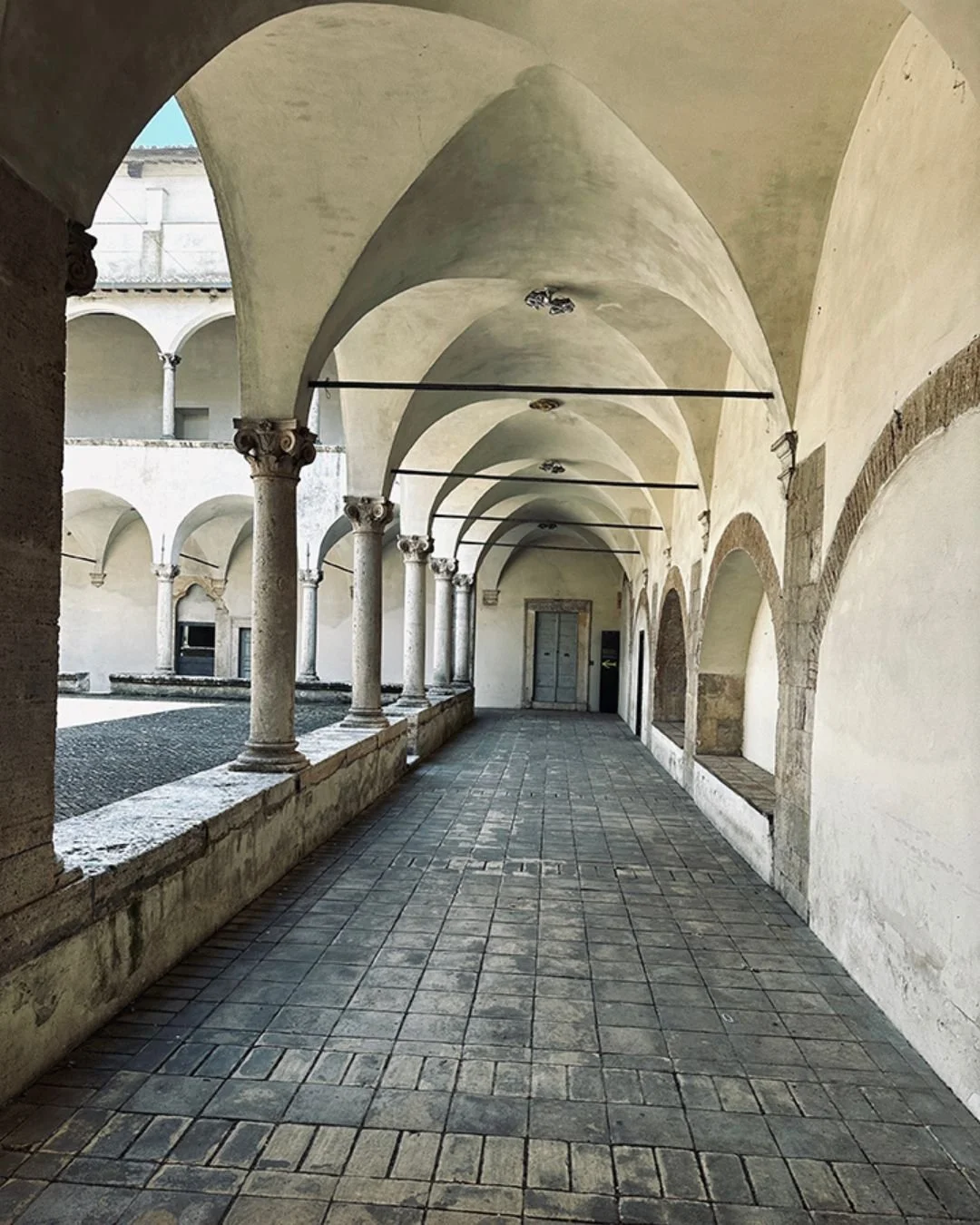
cloisters behind ancient walls
It was held at the Collegio Boccarini, inside the old town’s ancient defensive walls.
Yes, this is a photo of the venue. When I first set foot in these cloisters, I felt as if I’d stepped back in time. I found out later that it was a former Franciscan convent, with cloisters added in the 16th century. It now holds the town’s archaeological museum and is also used as a conference venue.
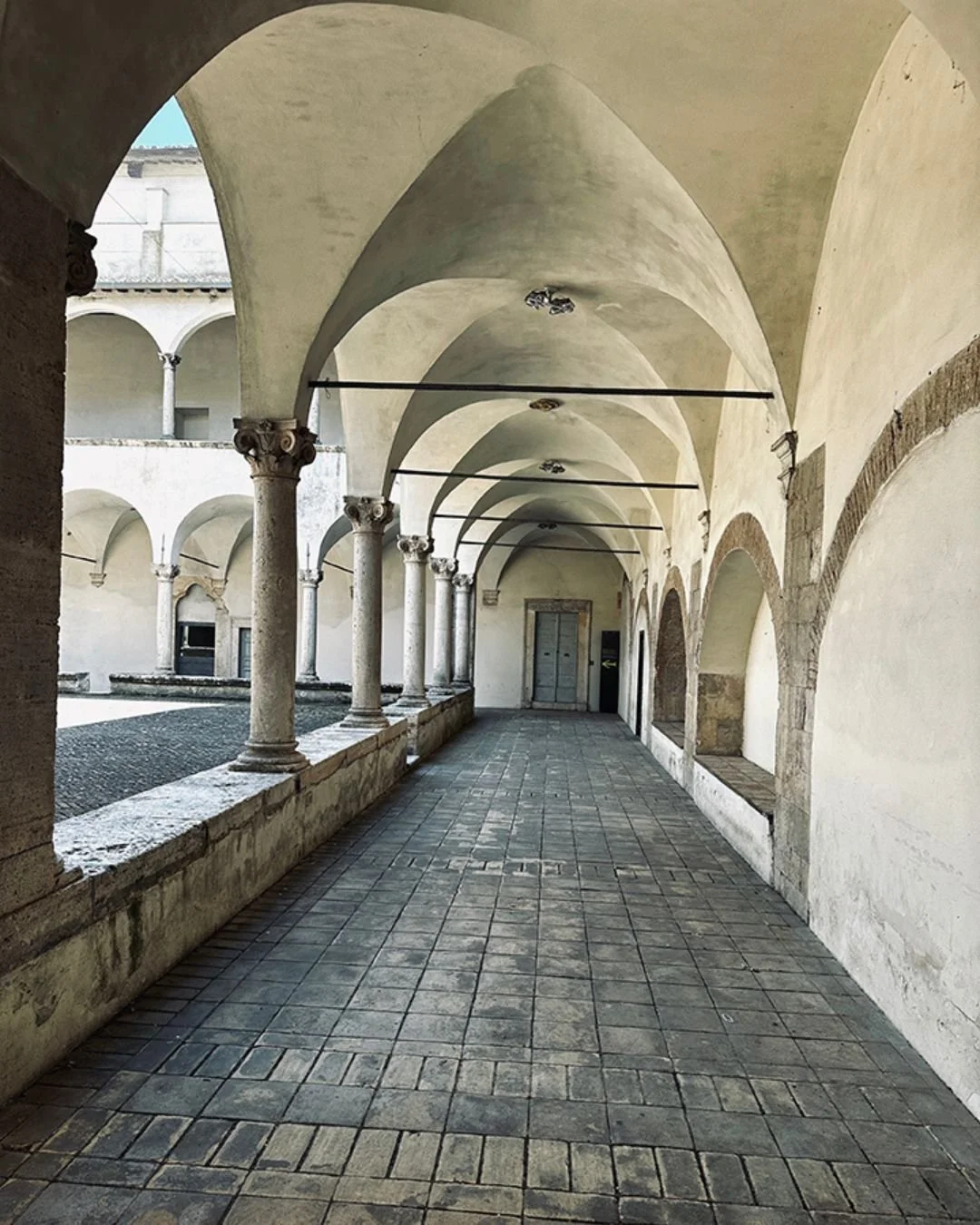
The Collegio Boccarini cloisters in Amelia, Italy.
The talks I’m still thinking about
The conference kicked off with a talk by investigative journalist Michael Blanding, author of The Map Thief: The Gripping Story of an Esteemed Rare-Map Dealer Who Made Millions Stealing Priceless Maps. To research his forthcoming book, The Gospel According to Hobby Lobby, he dug into the secret story of how the family behind the retailer created a museum filled with biblical antiquities that were looted, stolen, and forged. I love nonfiction that reads like a thriller, and I bet this book is going to be one of them.
Antiquities theft expert Jason Felch, another investigative journalist, created the Museum of Looted Antiquities (MoLA), a cheekily named database that studies artifacts that have been looted or stolen and then returned. It’s a catalogue that enables data to be collected about the global black market for antiquities.
I’m currently reading Jason Felch’s book Chasing Aphrodite: The Hunt for Looted Antiquities at the World’s Richest Museum that he coauthored with Ralph Frammolino, an exposé about how the Getty Museum acquired looted antiquities and that realization triggered a larger discussion about what should be done with stolen cultural property. In my Jaya Jones Treasure Hunt Mysteries, Jaya uncovers treasures stolen from India during colonial rule, so this is a subject I think a lot about.
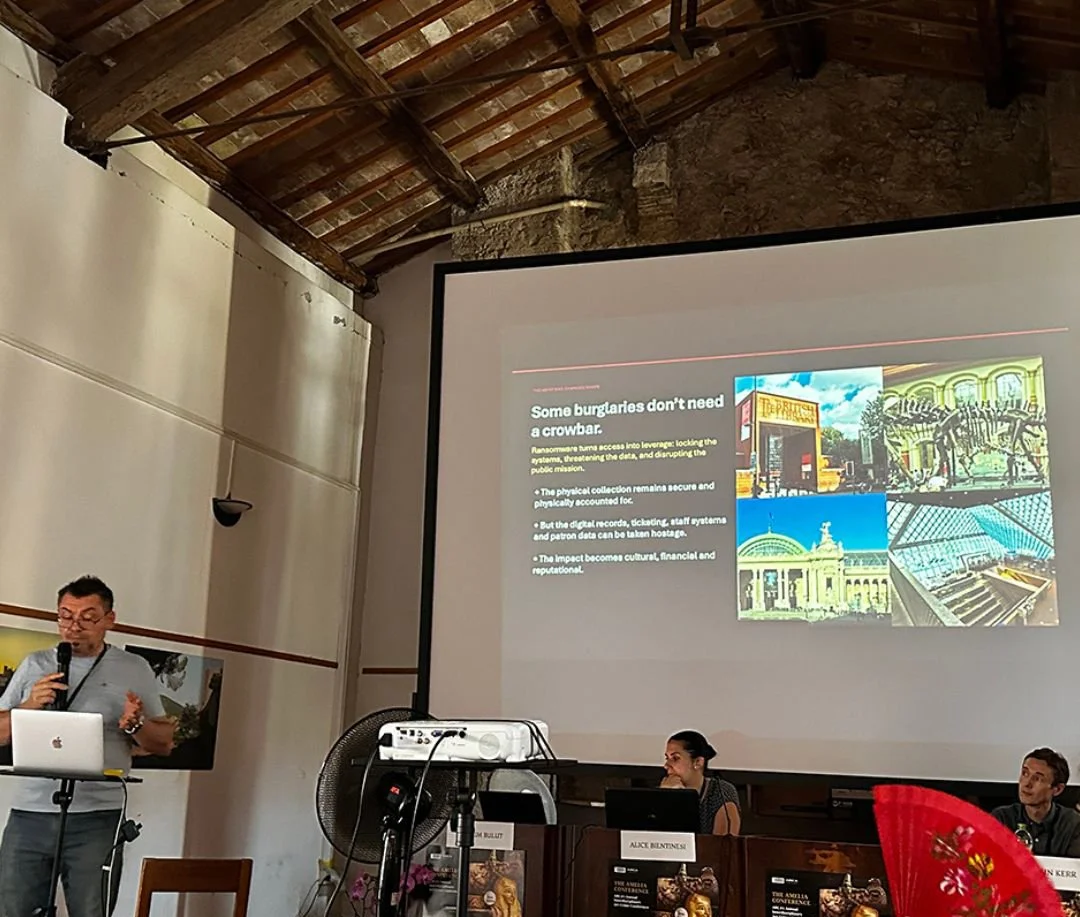
Security consultant Ibrahim Bulut, from Expertise & Security Consultants in Belgium, presenting on computer attacks to cultural institutions.
The session I didn’t expect to love
One session that I didn’t expect to be riveting, but ended up blowing my mind, was a presentation by security experts discussing digital security.
When dramatic thefts like heists at the Louvre take place, we think about the physical security of museums, but did you know a depressingly high number of museums and cultural institutions have had their websites and databases attacked? Digital data breaches can lead to real world losses that are even more destructive than splashy heists, such as information held for ransom not being available for researchers around the world or, even worse, deleted data that opens the door for secret thefts of objects in museum storage.
““You don’t need a getaway car. You need a wifi password.””
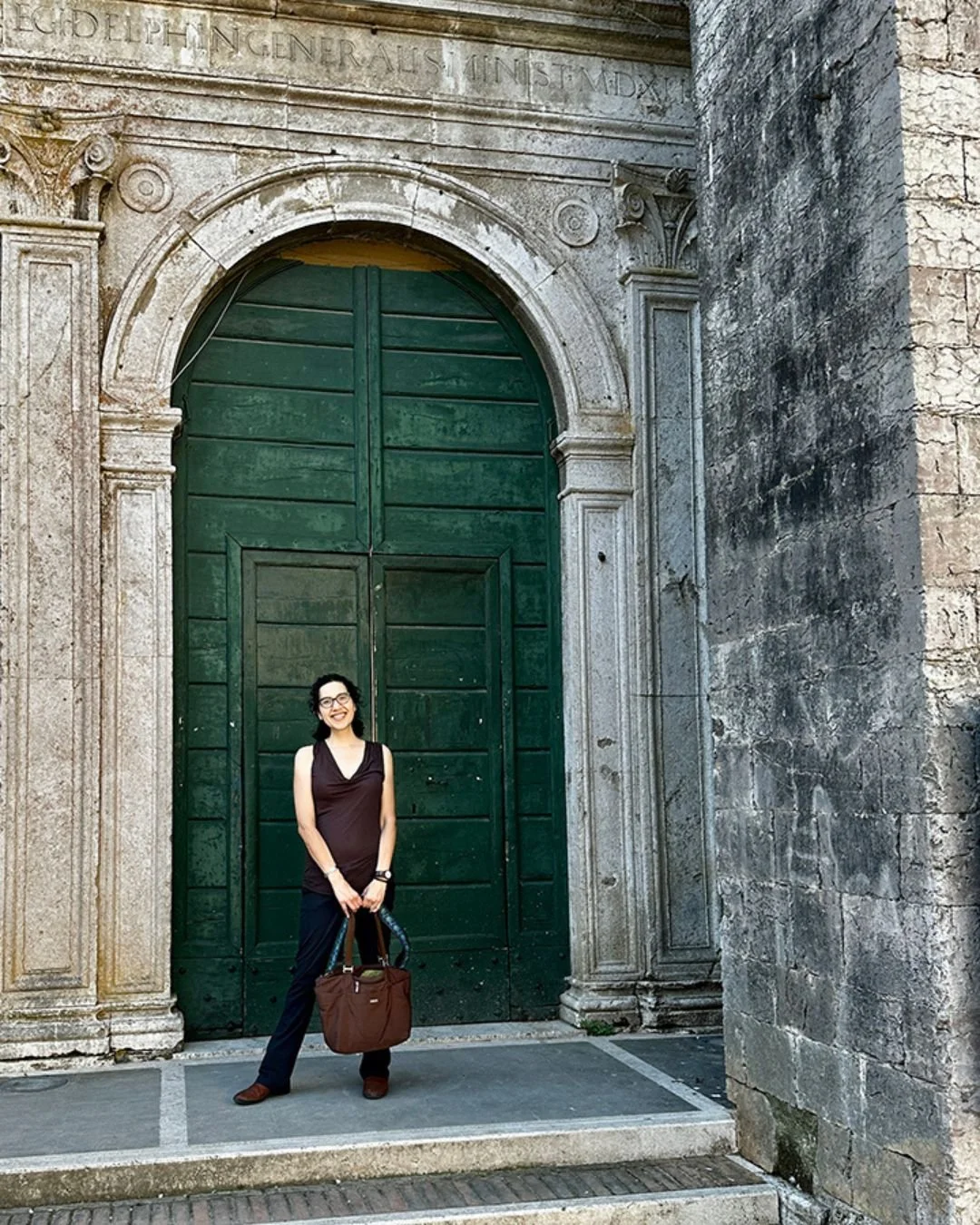
Gigi Pandian outside the door of the Collegio Boccarini cloisters in Amelia, Italy.
Other highlights
Other highlights included listening to a spirited panel discussion about the current state of provenance research (provenance is the history of an object’s location and ownership), learning of the Museum of Stolen Art that was created to help repatriate stolen religious art to Nepal, hearing about the challenges of modern authentication techniques, and having lunch with a member of the FBI’s Art Crime team.
At the end of the two-day conference, I had dozens of pages of notes that are sending me down additional rabbit holes of book research, and my mind was buzzing with story ideas.
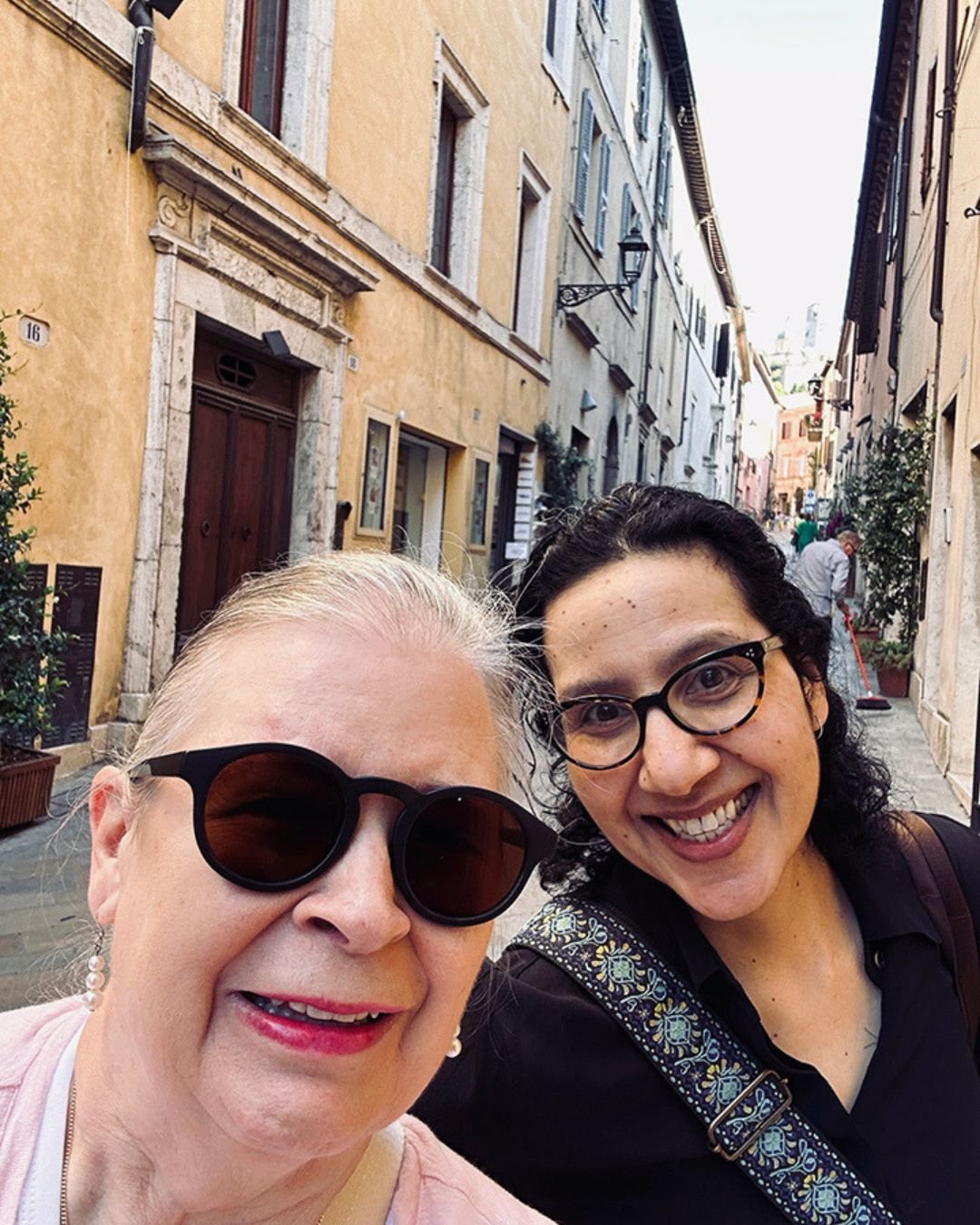
Stacy Allen and Gigi Pandian in the old walled section of Amelia, Italy.
Why a mystery novelist goes to these things
As much as I love learning about real world history and digging into archives, I was a terrible PhD student.
Why? Because I’m most drawn to the what ifs. In the real world, a missing work of art might stay lost for centuries and have a mundane solution to its disappearance. But in fiction? I can weave real cross-cultural history into a twisty mystery that takes my characters on an adventure that also has a satisfying resolution. In fiction, I can write the rewarding solutions and happy endings we don’t always get in real life.
So no, I never finished my PhD. But I proudly write escapist fiction. Life’s a lot more fun this way.
After the conference, I wasn’t quite done with Italy. I had some exploring to do.
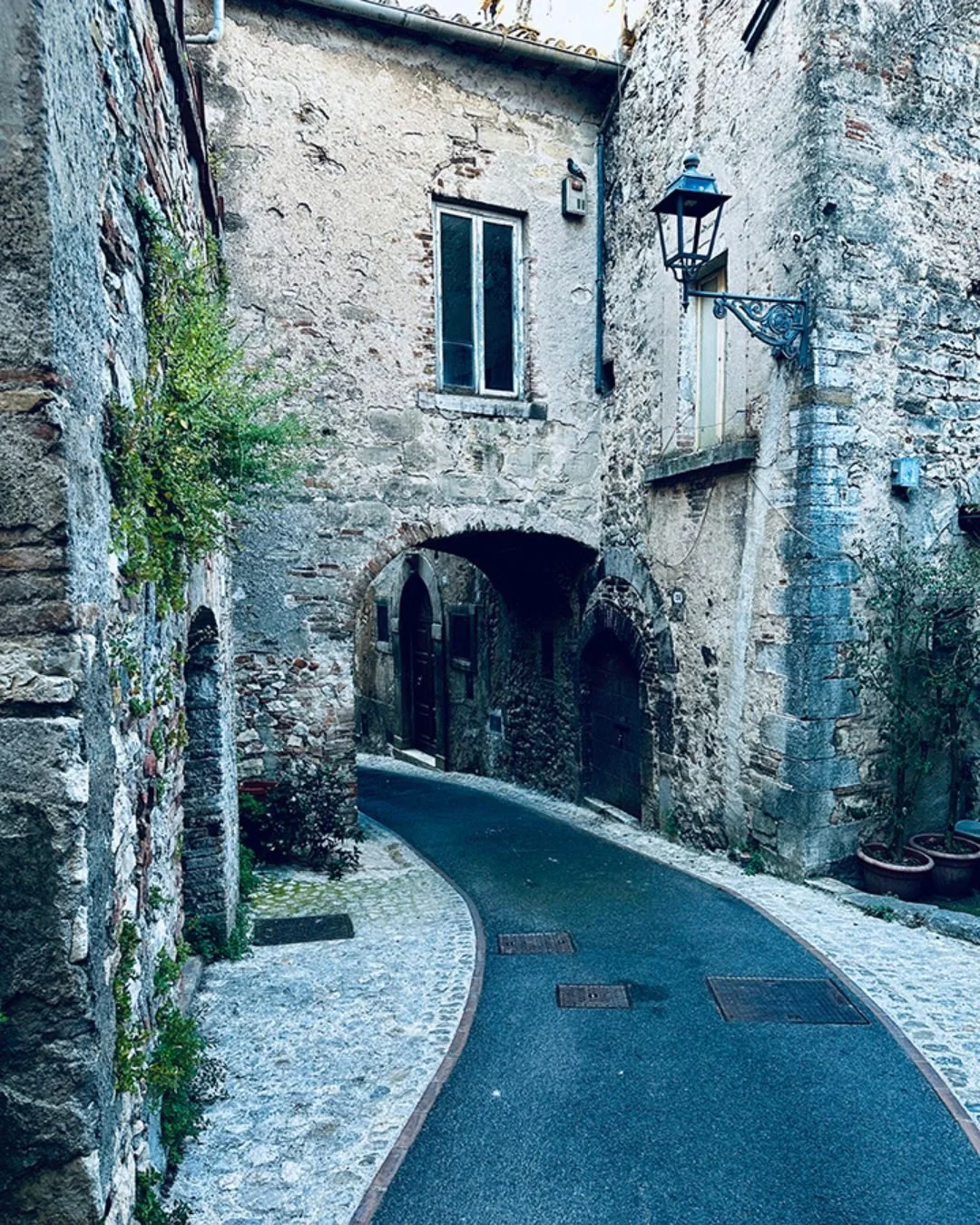
One of Amelia, Italy’s narrow streets.
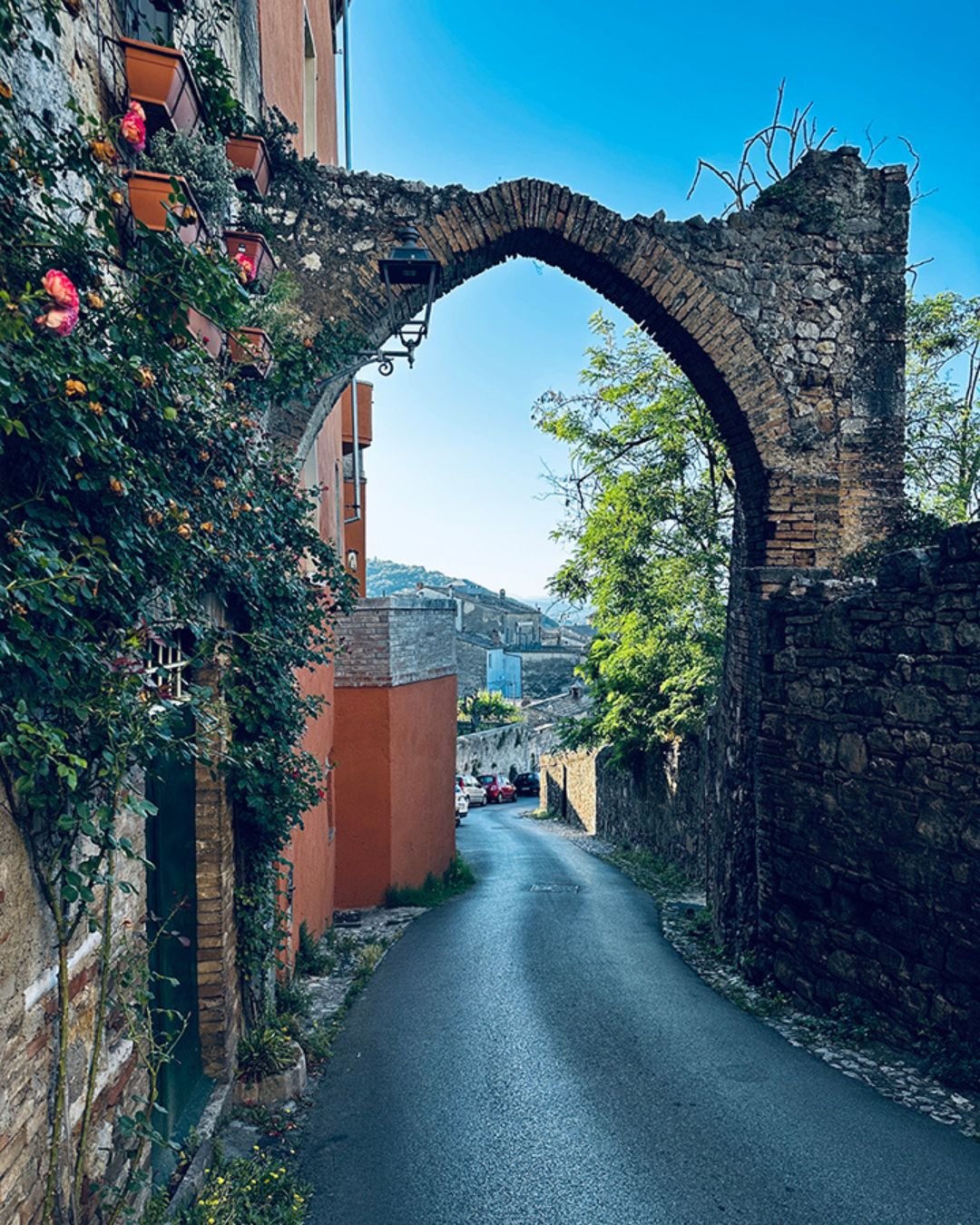
Walking up to the top of the walled old town area of Amelia, Italy.
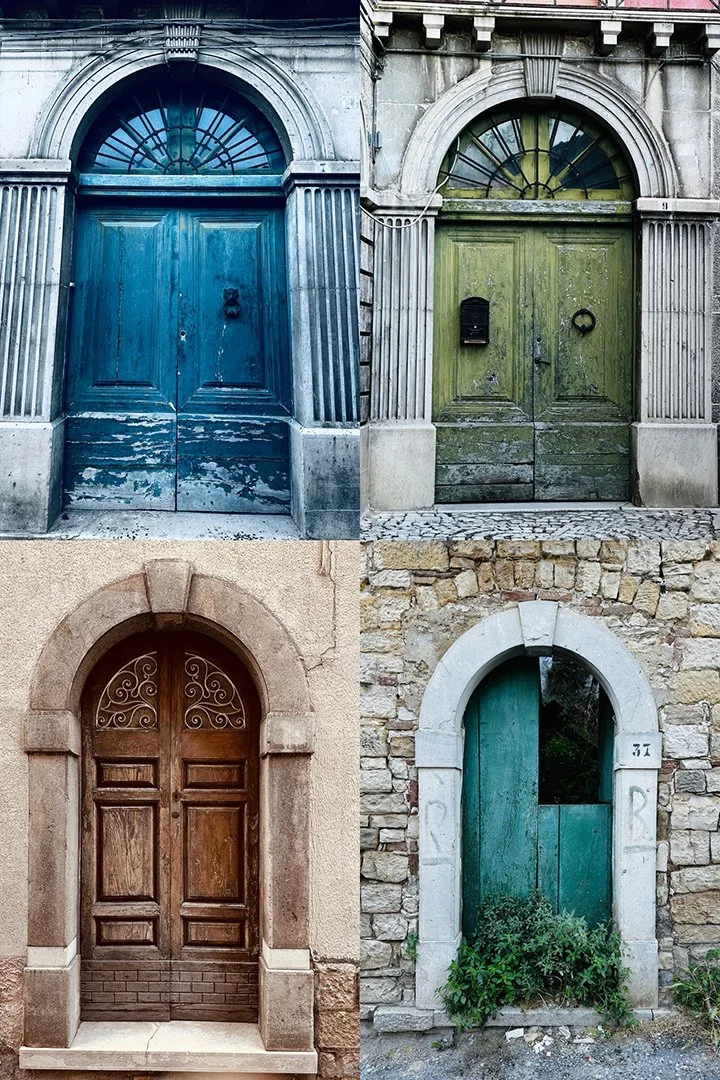
Doors in Castelmauro, Italy.
One last stop: The Park of Monsters
Before leaving Italy, I returned to one of my favorite spots in Italy: Bomarzo.
A decade ago, I set my novel Michelangelo’s Ghost in Bomarzo, Italy’s Sacro Bosco (Sacred Wood in English), more commonly called the Park of Monsters. I hadn’t been back in all that time, but on my last day in Italy, I got to spend the morning there. It was every bit as inspiring.
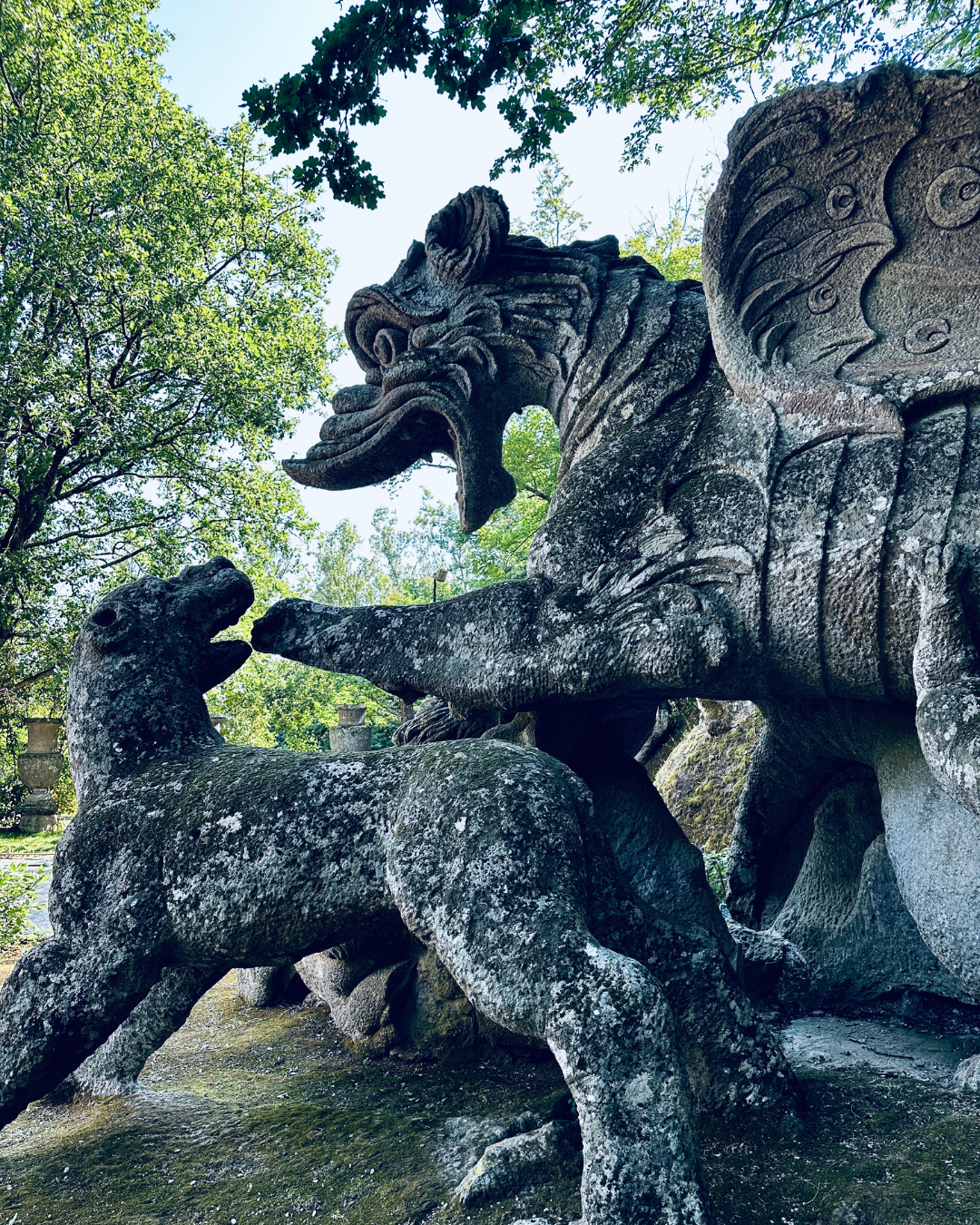
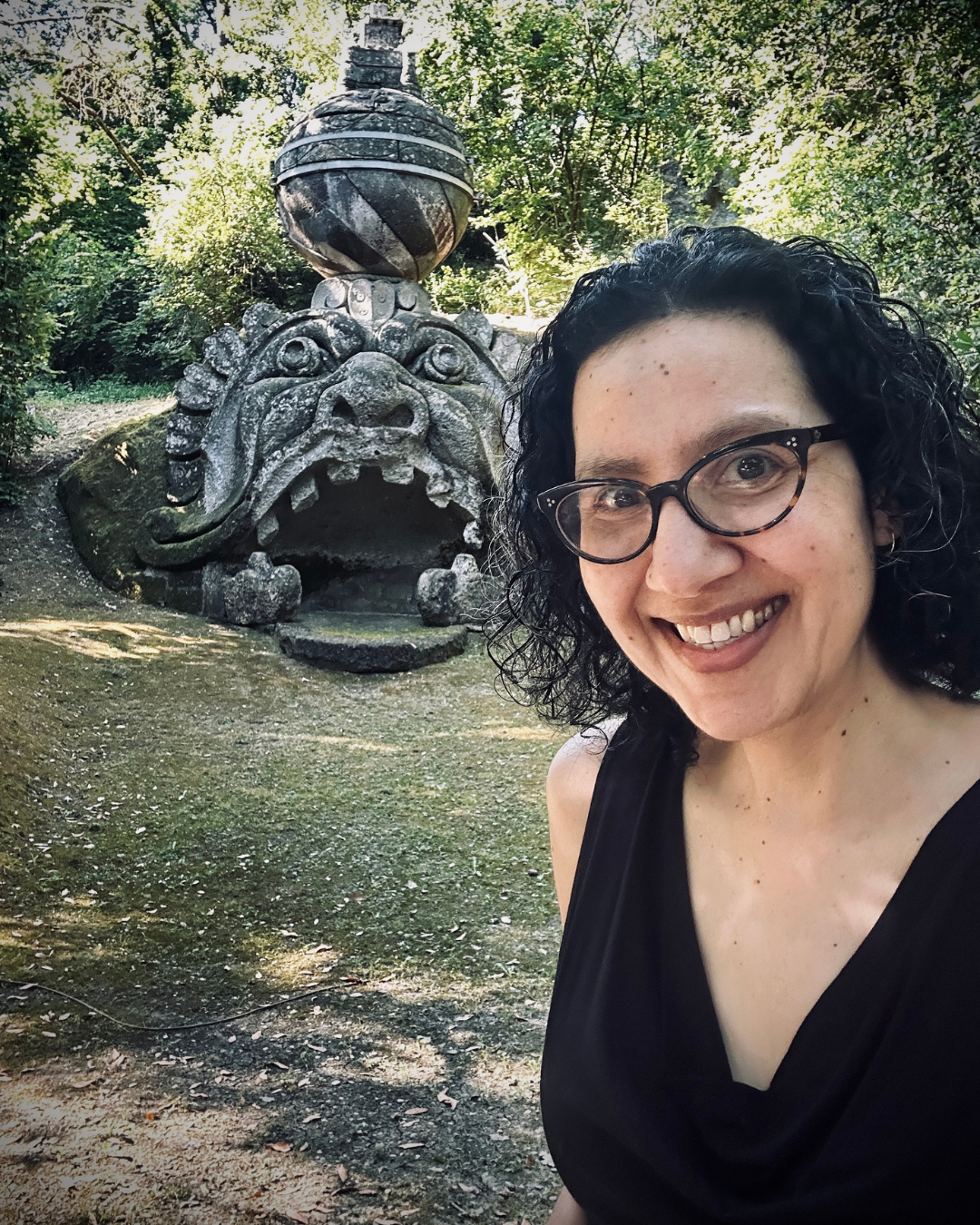
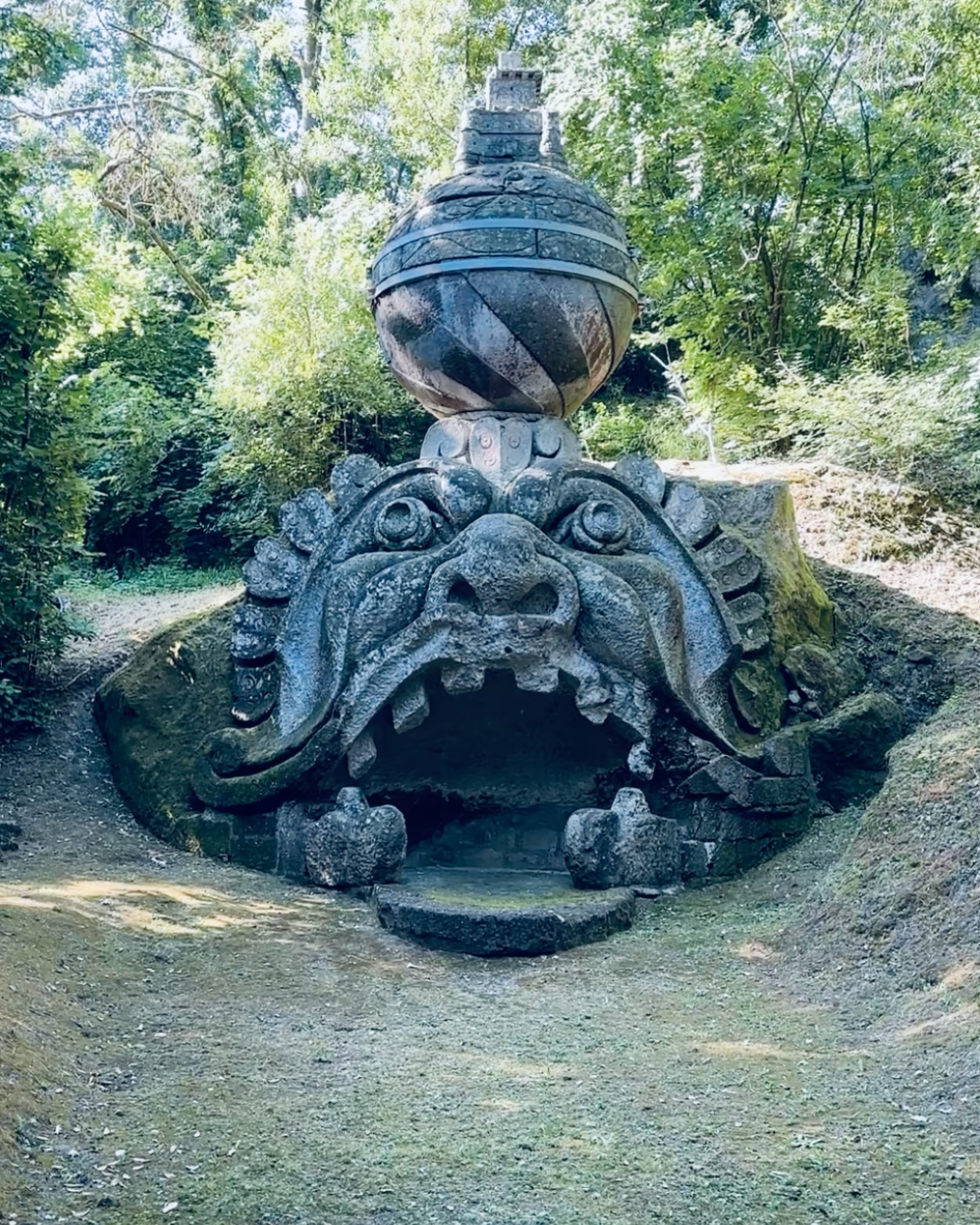
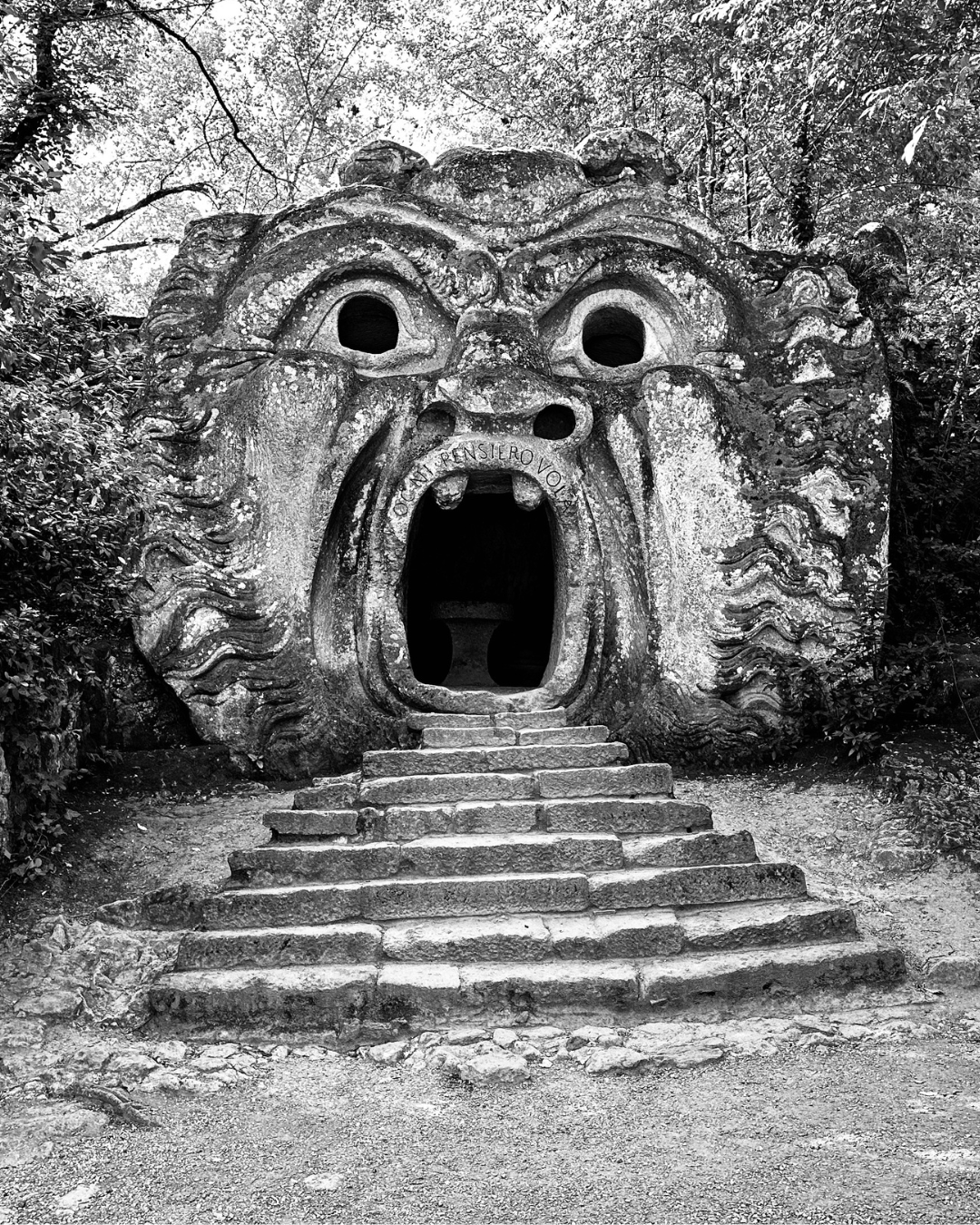
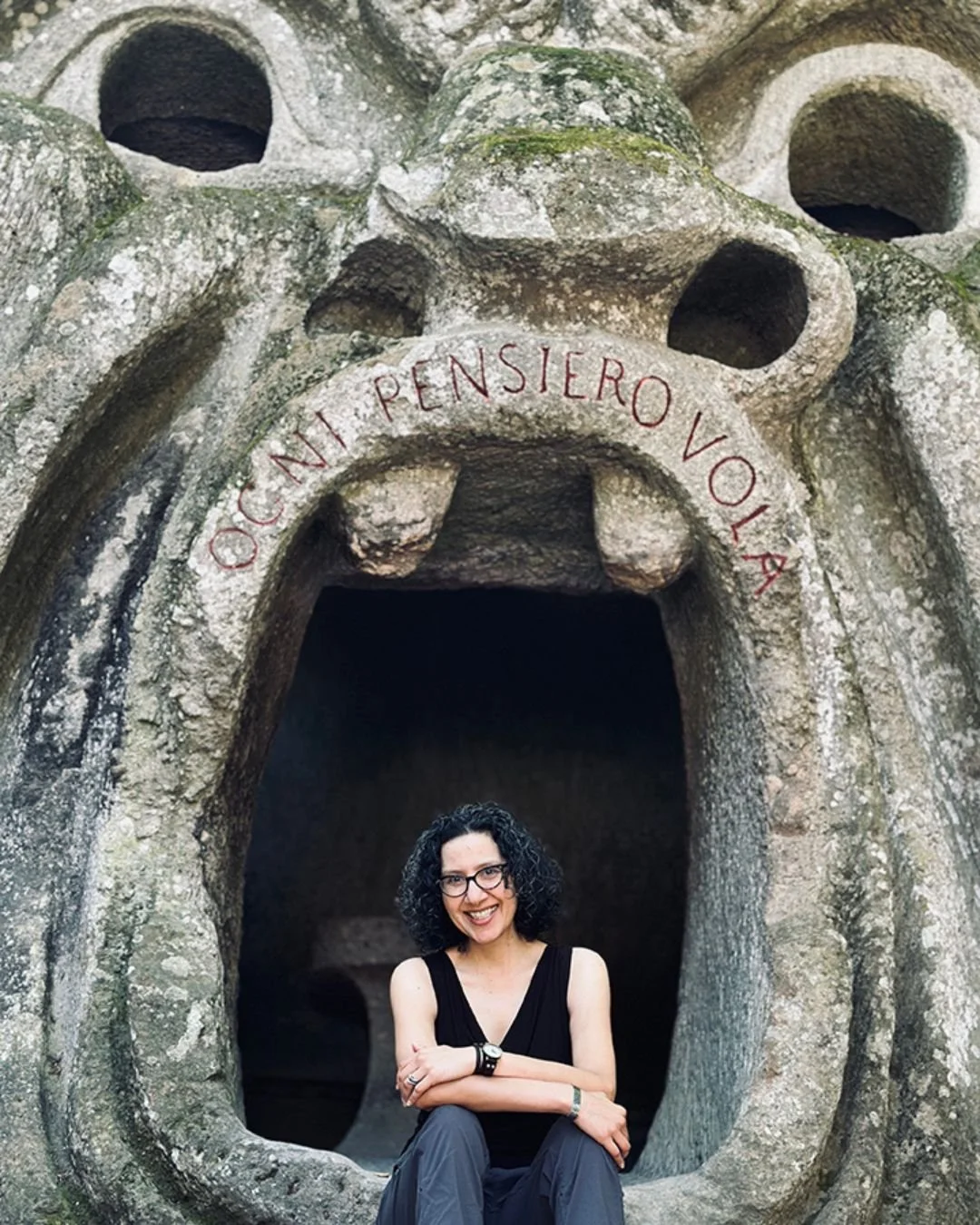
Gigi Pandian in Bomarzo, Italy's Park of Monsters.